
Your oven stops heating. Your bake setting works but your broil does not. Or it simply will not turn on at all. These problems feel frustrating, especially mid-week when dinner is already planned. The good news is that most common oven faults come down to a handful of fixable components, and many of them cost very little to address if you catch the problem early.
Understanding how to repair oven faults correctly saves you money and avoids unnecessary replacements. This guide covers gas and electric ovens, every major problem type, what causes them, and exactly how to fix each one safely.
What Is an Oven?
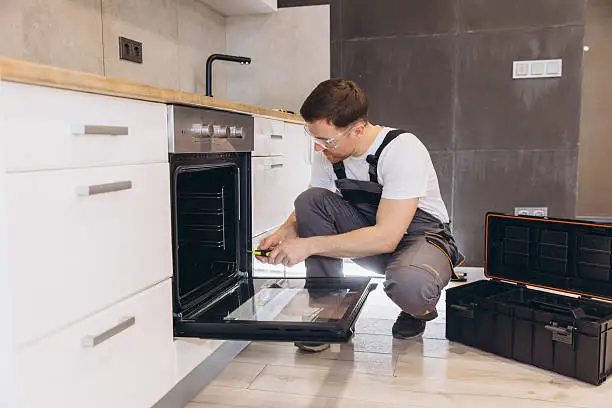
An oven is a thermally insulated appliance that uses either gas combustion or electric heating elements to generate and hold heat inside an enclosed chamber. It is used for baking, roasting, grilling, and broiling food at controlled temperatures.
Modern ovens combine a thermostat, control board, heating elements or gas burners, a door seal, and often a convection fan into one appliance. When any single component fails, it affects the whole system which is why oven repair usually requires diagnosing the correct part rather than guessing.
Different Types of Ovens
Knowing your oven type matters before you start any repair. The components, safety precautions, and fix methods differ between them.
Conventional electric ovens use a bake element at the bottom and a broil element at the top. These are the most common in UK and US homes. Parts are widely available and straightforward to replace.
Gas ovens use a burner at the base ignited by either a standing pilot light or an electronic igniter. They heat faster but require more caution due to the gas supply.
Convection ovens add a fan and a third heating element at the back to circulate hot air. They can develop fan motor faults in addition to standard element problems.
Double ovens have two separate cavities, each with independent controls and elements. A fault in one cavity does not always mean both need repair.
Range cookers combine a hob and one or more ovens in a single unit. Repairs often involve multiple components and can be more complex to access.
Common Signs Your Oven Needs Repair
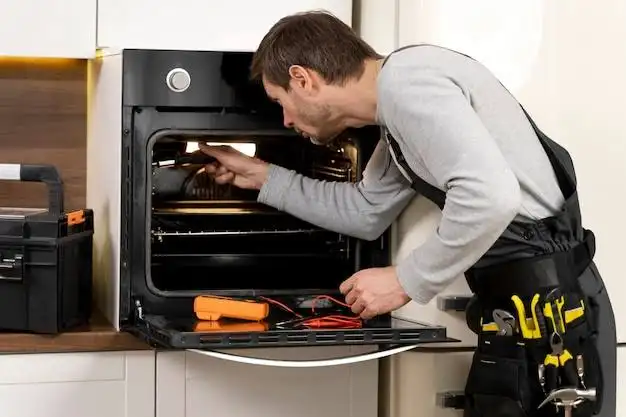
Catching a problem early almost always means a cheaper repair. Watch for these warning signs before the fault gets worse.
- The oven takes noticeably longer than usual to reach temperature
- Food comes out consistently undercooked or overcooked despite correct settings
- The oven turns on but the interior light or display flickers
- You can smell burning or a faint gas odour when the oven is running
- The oven door does not seal properly or springs back open
- The temperature reading on the display does not match the actual heat inside
- The broil function works but baking does not, or vice versa
- The oven clicks repeatedly but does not ignite (gas models)
Any one of these signs points to a specific component that needs checking. None of them mean you need a new appliance immediately.
Common Oven Problems and Their Solutions
Most oven faults trace back to a short list of components. Here is a practical breakdown of what goes wrong and why.
Faulty Heating Element (Electric Ovens)
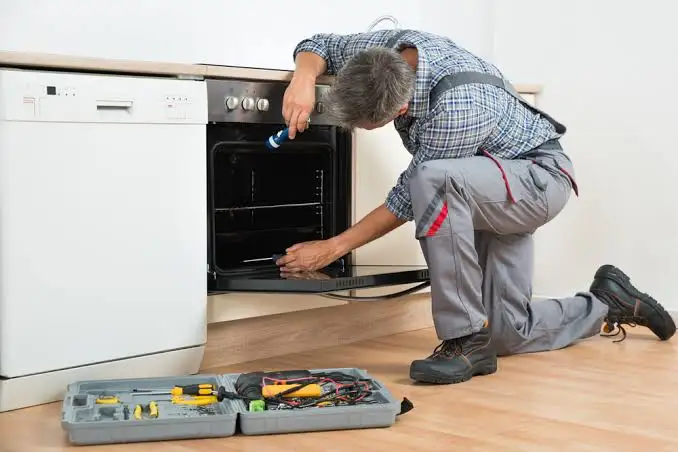
The bake element sits at the bottom of the oven cavity. When it fails, you will notice the bottom of the food stays raw while the top cooks. Visually, a failed element often shows a visible break, blister, or burn mark. Replacing a bake element is one of the most straightforward oven repairs. Most elements unscrew from the back wall with two screws and disconnect from slip-off terminals.
Failed Igniter (Gas Ovens)
The igniter is the most commonly replaced part in gas ovens. A weak or failed igniter will glow red but not get hot enough to open the safety valve, so the burner never lights. If your gas oven clicks and glows but does not ignite within 90 seconds, the igniter is the likely cause.
Faulty Thermostat
A thermostat that reads temperature incorrectly causes persistent under or over-heating even when the element and igniter are fine. You can test this with an oven thermometer placed inside if the displayed temperature and the measured temperature consistently differ by more than 25 degrees, the thermostat needs calibrating or replacing.
Broken Door Seal
The rubber or silicone gasket around the oven door keeps heat inside the cavity. A cracked or deformed seal lets heat escape, causing longer cooking times and higher energy bills. Door seals are model-specific but generally inexpensive and easy to clip or hook into place.
Defective Control Board
Control boards manage temperature regulation, timer functions, and mode selection. A failed board can cause the oven to behave erratically displaying wrong temperatures, failing to hold heat, or not responding to inputs. Control boards are more expensive to replace and usually require professional diagnosis to confirm the fault.
What Causes an Oven to Stop Working?
Ovens stop working for a predictable set of reasons once you understand the system. The most common causes are age-related wear on heating elements, a weak igniter that can no longer open the gas valve, a blown thermal fuse that cuts power to prevent overheating, a tripped circuit breaker for electric models, or a faulty control board.
For gas ovens specifically, a blocked burner orifice from grease buildup or a defective safety valve can prevent the burner from lighting even when the igniter works correctly.
Thermal fuses are worth checking first on any oven that suddenly stopped working without warning especially after a self-clean cycle, which runs at very high temperatures and can blow a thermal fuse that was already near the end of its life.
Safety Tips Before Repairing an Oven
Safety comes before every repair step. These precautions are not optional.
Electric ovens: Disconnect the appliance from the mains socket completely before opening any panels or touching any internal components. Do not rely on turning the oven off at the controls; the components can still carry voltage.
Gas ovens: Turn off the gas supply at the isolation valve behind or beneath the appliance before any repair. If you smell gas strongly when you open the appliance, do not proceed to ventilate the room, leave the building, and call your gas provider.
Both types: Let the oven cool fully before starting work. Heating elements and interior surfaces retain high temperatures for longer than most people expect.
Thermal fuse location: On most models, the thermal fuse is located behind the rear panel or near the control board. Always consult your model’s service manual before opening internal panels panel locations vary significantly between brands.
Never attempt to repair a gas supply line, gas valve, or any component directly connected to the gas feed unless you hold the correct gas-safe qualifications. These repairs are legally restricted in most countries.
Essential Tools for Oven Repair
You do not need a specialist toolkit for most oven repairs. These are the basics.
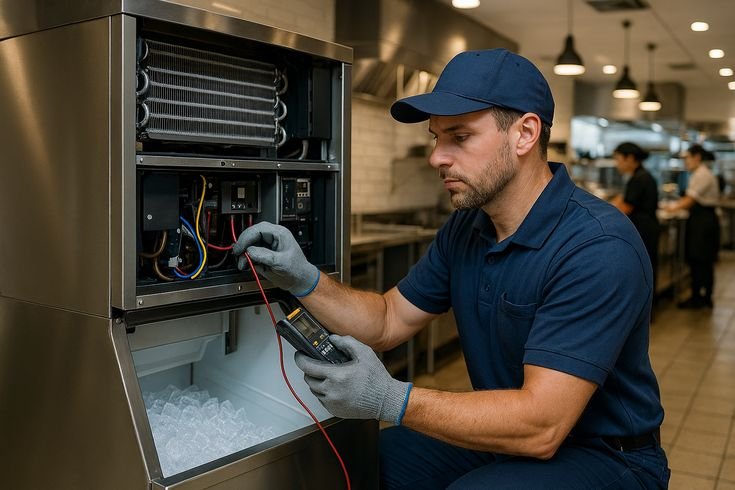
- Multimeter for testing continuity in elements, fuses, igniters, and thermostats
- Flathead and Phillips screwdrivers
- Nut driver set (1/4 inch is most common for oven panels)
- Needle-nose pliers for accessing terminals in tight spaces
- Replacement parts specific to your oven model and serial number
- Oven thermometer for temperature calibration testing
- Work gloves and safety glasses
Before ordering parts, always verify the part number against your model number, which is usually found on a label inside the oven door frame.
DIY Oven Repair vs. Professional Repair
The right choice depends on the fault, your comfort level, and the cost of the part versus the cost of a call-out.
DIY repair makes sense: replacing a bake or broil element, swapping a door seal, replacing a temperature sensor, changing a light bulb, and testing and replacing a thermal fuse. These tasks involve accessible components, widely available parts, and no gas or high-voltage connections.
Professional repair makes more sense for: control board replacement, gas valve or igniter replacement on gas ovens if you are not gas-safe qualified, convection fan motor replacement in models with difficult access, and any fault that requires removing the oven from a built-in cabinet for access.
A general guide: if the repair part costs under £80 and you can access it safely with basic tools, DIY is a reasonable option. If the diagnosis is unclear or the repair involves the gas supply or main control board, a professional diagnosis first saves money in the long run.
How to Repair an Electric Oven
Repairing an electric oven starts with identifying which part has failed. The most common repair is replacing a heating element.
Step 1: Disconnect the oven from the mains. Remove the plug or switch off the dedicated circuit breaker and confirm with a voltage tester.
Step 2: Remove the oven racks to access the cavity fully.
Step 3: For a bake element: locate the two screws at the back of the element where it meets the rear wall. Remove them and gently pull the element forward the terminals will slide out from holes in the rear wall on most models.
Step 4: Disconnect the wires from the element terminals. Note or photograph which wire connects to which terminal before disconnecting.
Step 5: Fit the new element by connecting the wires to the correct terminals and pushing them back through the rear wall. Secure the screws and test the oven.
For a broil element, the process is identical but accessed from the top of the oven cavity.
How to Repair a Gas Oven
Gas oven repair follows a different sequence because the ignition system and gas supply add steps that electric repairs do not have.
Step 1: Turn off the gas supply at the isolation valve. Wait five minutes before opening any panels to allow residual gas to dissipate.
Step 2: Remove the oven floor panel (usually two screws at the rear) to access the burner and igniter assembly.
Step 3: To test the igniter, use a multimeter set to resistance mode. A working igniter reads 40 to 400 ohms depending on the model. A reading outside this range or an open circuit means the igniter has failed.
Step 4: Disconnect the igniter wires and remove the mounting screws. Fit the new igniter in reverse order, reconnect wires, secure screws, and replace the floor panel.
Step 5: Turn the gas back on and test. The burner should ignite within 60 to 90 seconds of turning the oven on.
If the igniter tests fine but the oven still will not light, the gas safety valve may be faulty. This component requires a gas-safe professional to replace.
How to Fix an Oven That Won’t Heat
An oven that turns on but produces no heat is one of the most common calls to appliance repair technicians. The fix depends on the type.
Electric ovens: Test the bake element visually first. A visible break or burn mark means replacement is needed. If the element looks intact, use a multimeter to test continuity; no continuity means it has failed internally. Also check the thermal fuse and the bake element relay on the control board.
Gas ovens: Check whether the igniter glows. If it glows orange but the burner does not light after 90 seconds, the igniter is too weak to open the gas valve to replace it. If the igniter does not glow at all, check the igniter wiring and the control board output.
How to Fix an Oven Door That Won’t Close
A door that will not close properly loses heat and extends cooking times. The cause is almost always one of three things.
Worn door seal: Run your hand around the door gasket with the oven warm. If you feel heat escaping at any point, the seal needs replacing. Most seals clip into a channel around the door frame and pull out by hand.
Broken door hinge: Open the door fully and look at the hinge arms on both sides. A broken or bent hinge prevents the door from sitting flush when closed. Hinges are model-specific but generally available and replaceable with basic tools.
Door spring failure: Some oven models use spring-loaded hinges that can lose tension over time. A door that falls open or feels unusually light to hold usually has a spring fault. Replacing door springs requires removing the door from the oven and accessing the hinge mechanism from the inside of the door frame.
How to Fix an Oven That Won’t Turn On
An oven that shows no signs of life, no display, no response usually has a power supply issue rather than an internal component fault.
For electric ovens: Check the circuit breaker or fuse for the oven circuit first. A tripped breaker is the most common cause of a completely dead oven. Reset it and test if it trips again immediately, there is a wiring fault that needs a professional.
Also check the thermal fuse, which is a safety device designed to cut power permanently when the oven overheats. It is a one-time component once blown, it needs replacing. Thermal fuses cost very little and testing them with a multimeter takes under two minutes.
For gas ovens: A gas oven with no display or control panel response has an electrical supply problem rather than a gas problem. Follow the same steps as electric check the supply, breaker, and thermal fuse.
How to Fix Uneven Oven Heating
Uneven heating where one side of the oven runs hotter than the other, or the top and bottom cook at different rates has several possible causes.
A failed bake or broil element that still partially works can cause uneven heating without completely stopping. Testing element continuity tells you whether it is functioning fully.
A faulty convection fan on fan-assisted models is another common cause. If the fan motor has seized or slowed, hot air is not being distributed properly. You will often hear the difference: a healthy fan runs quietly, while a failing one may hum, rattle, or run intermittently.
Calibrating the thermostat is worth trying first if no parts appear visibly damaged. Some ovens allow you to adjust the thermostat offset through the control panel and check your model’s manual for this option before ordering parts.
You can read about: How to Repair Freezer Door Seal
Oven Repair Cost: What to Expect
Repair costs vary by fault type, oven model, and whether you use a professional or fix my oven yourself.
DIY parts costs:
- Bake or broil element: £15 to £60 depending on the model
- Door seal: £10 to £35
- Thermal fuse: £5 to £15
- Gas igniter: £20 to £60Temperature sensor: £15 to £40
- Control board: £80 to £200+
Professional repair costs (including labour):
- Standard call-out and diagnosis: £60 to £90
- Element replacement (professional): £100 to £160 total
- Igniter replacement (gas, professional): £120 to £180 total
- Control board replacement: £200 to £350+ depending on brand
As a general rule, if a professional repair costs more than 50% of the current replacement value of the oven, replacement is worth considering especially on ovens over 10 years old.
How to Maintain Your Oven After Repair
A repaired oven lasts longer with consistent maintenance. These habits reduce the chance of the same fault returning.
Clean the oven regularly. Grease buildup on elements accelerates their wear and can cause burning smells and uneven heat distribution. Wipe down after heavy use and deep clean every three to four months.
Avoid slamming the oven door. Door hinge arms bend over time with repeated impact. Closing the door firmly but gently extends hinge life significantly.
Check the door seal annually. Run your hand around the seal with the oven at temperature. Replace it at the first sign of cracking or heat escaping.
Do not use the self-clean cycle too frequently. Self-cleaning runs at very high temperatures typically above 450 degrees Celsius and puts significant stress on the thermal fuse, door seal, and control board. Using it more than a few times a year shortens component life.
Keep vents clear. Oven vents, usually located at the rear of the hob above the oven, should stay unobstructed. Blocked vents cause internal temperatures to spike beyond design limits.
When to Call a Professional for Oven Repair Service
Some repairs are better handled by a professional not because they are impossible to DIY, but because the risk of getting them wrong is too high.
Call a professional when: the oven involves any gas supply component, the control board requires diagnosis before replacement, the fault is intermittent and difficult to reproduce, or you have replaced a part and the fault persists.
If you are in the Kent area, Just Appliances provides trusted oven repair near Kent for all makes and models. Our technicians carry common parts for same-day repairs, and they offer a transparent quote before starting any work with no call-out surprise charges.
Conclusion
Most oven problems come down to a small number of components: a heating element, an igniter, a door seal, a thermal fuse, or a thermostat. Knowing how to repair oven faults means knowing which part to check first rather than replacing parts at random.
Start with the simplest possible cause: a tripped breaker, a blown fuse, or a visible element failure. Work outward from there with a multimeter and basic tools. Most home oven repairs cost under £60 in parts if diagnosed correctly.
When the fault is unclear, intermittent, or involves the gas supply, professional diagnosis is the most cost-effective first step. A correct diagnosis on the first visit saves more than it costs.
Frequently Asked Questions
Can I repair an oven myself without any experience?
Yes for certain faults. Replacing a bake element, a door seal, a light bulb, or a thermal fuse requires no specialist experience and only basic tools. These repairs involve no live voltage or gas connections when done correctly with the power disconnected. Anything involving the control board, gas components, or wiring inside the appliance is better handled by a professional unless you have relevant experience.
How do I know if my oven element has failed?
Look for a visible break, blister, or burn mark on the element itself. If nothing is visible, test continuity with a multimeter: a working element gives a reading, and a failed one shows no continuity at all. Partial element failure (element glows but only in sections) also shows up on a multimeter as abnormally high resistance.
How long do ovens typically last before they need replacing?
Most ovens last 12 to 15 years with normal use. Electric ovens at the upper end of this range often have worn elements and degraded door seals, but these are inexpensive repairs that extend the appliance life significantly. If the control board or a major structural component fails on an older oven, replacement is usually more economical than repair.
Why does my oven smell like burning after a repair?
A burning smell after fitting a new element is usually just the protective coating on the new part burning off during the first use. Run the oven empty at full temperature for 20 minutes with the kitchen ventilated. If the smell persists beyond the first two uses, check that the element is correctly positioned and not contacting the oven cavity walls.
Is it safe to use my oven if the door seal is damaged?
Using the oven with a damaged seal is not dangerous in the immediate sense, but it wastes energy, extends cooking times, and can cause overheating of the surrounding cabinetry if the seal is badly deteriorated. Replace the seal as soon as you notice consistent heat escaping around the door. It is one of the cheapest and easiest oven repairs available.