

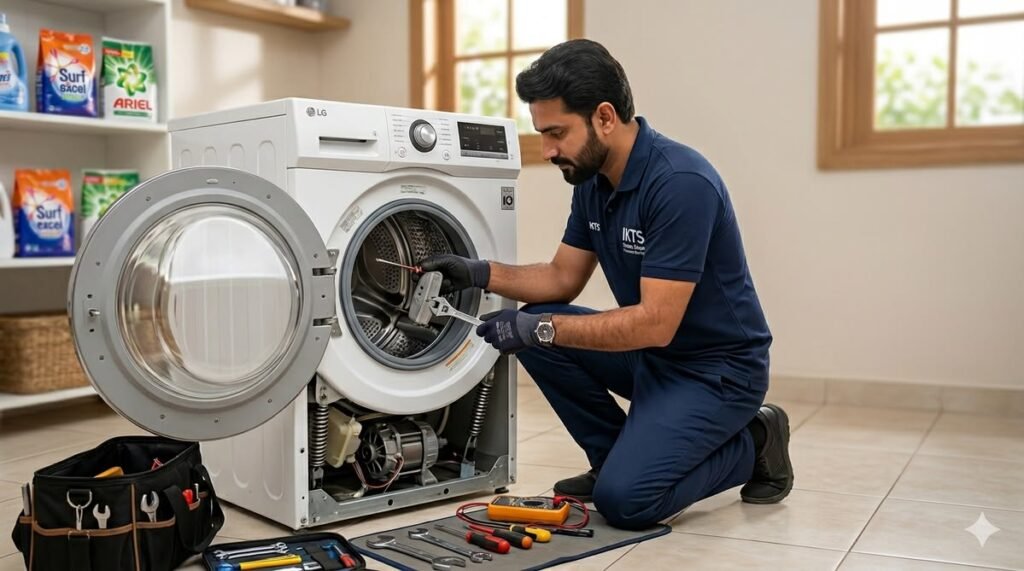
The good news is that many vibration problems can be resolved with a few simple checks. Start by stopping the washer, redistributing the clothes, and checking whether the machine is level. If the shaking continues even when the washer is empty and properly levelled, it may need professional inspection.
Why Is My Washing Machine Shaking Violently?
The most common reasons a washing machine shakes violently include an unbalanced load, an uneven floor, loose levelling feet, overloading, or improper installation. Front-load washers can also vibrate severely if their shipping bolts were not removed before use.
Before assuming that a major part has failed, check the simple causes first.
An Unbalanced Load
Clothes can collect on one side of the drum during washing. When the machine reaches a high spin speed, that uneven weight can create significant vibration.
This is especially common with heavy or bulky items such as blankets, towels, rugs, and sheets. Manufacturers recommend distributing laundry evenly and avoiding overloaded or single-item loads when they can become unbalanced.
The Washer Is Not Level
A washing machine needs to sit firmly and evenly on the floor. If one or more feet are not making proper contact, the washer can rock during the spin cycle.
Place a level on top of the washer and check it from side to side and front to back. Also gently rock the machine from corner to corner. If it moves or rocks, the levelling feet may need adjustment.
The Washer Is Overloaded
Stuffing too many clothes into the drum can prevent the load from distributing properly. Heavy, wet clothing can then pull the drum off balance during spinning.
Follow the capacity recommendations in your owner’s manual rather than filling the drum as tightly as possible.
Shipping Bolts Are Still Installed
If your front-load washer is newly installed and immediately shakes violently, check the shipping or transit bolts.
These bolts secure the drum during transportation and must be removed before normal operation. Manufacturers warn that leaving them installed can cause excessive vibration and potentially damage internal components.
How to Stop a Washing Machine From Shaking
If you’re wondering how to stop a washing machine from shaking, work through these checks in order.
1. Stop the Cycle and Redistribute the Load
Pause the washer and wait until the drum has stopped moving. Open the machine according to its normal operating procedure and redistribute the clothing evenly.
If you have one heavy item, such as a large blanket or bath mat, remove it temporarily or follow your washer manufacturer’s instructions for washing bulky items.
Then restart the spin cycle and see whether the vibration improves.
2. Check the Washer’s Level
Place a spirit level on the top of the machine.
Check:
- Side to side
- Front to back
- Stability at all four corners
If the washer rocks, adjust the levelling feet according to the manufacturer’s instructions. Each foot should make firm contact with the floor, and the locking nuts should be secured if your model uses them.
3. Make Sure the Washer Is Not Touching Anything
A washer can sound much louder if it is pressed against a wall, cabinet, dryer, or another object.
Check around the machine and make sure hoses, cords, or other objects aren’t pulling against or hitting the cabinet.
4. Run a Test Cycle
After redistributing the load and levelling the machine, run a short rinse-and-spin or appropriate test cycle.
Watch the washer as it reaches higher spin speeds. If it remains stable, the original problem was likely related to the load or levelling.
If it continues shaking violently, further troubleshooting may be necessary.
How to Fix an Unbalanced Washing Machine
Knowing how to fix an unbalanced washing machine starts with determining whether the problem happens only with certain loads or occurs every time.
If the shaking only happens with blankets, towels, sheets, or other bulky items, the load itself may be the problem. Large absorbent items can hold substantial amounts of water and become difficult to distribute evenly during spinning.
Try these steps:
- Pause the washer safely.
- Redistribute the clothes around the drum.
- Remove some items if the washer is overloaded.
- Avoid washing a single bulky item if your manufacturer’s instructions advise against it.
- Restart the spin cycle.
If the machine shakes with normal-sized, evenly distributed loads, check its levelling and installation.
Why Does My Washer Shake During the Spin Cycle?
If you’re asking why does my washer shake during the spin cycle, the main reason is that spinning creates much greater movement than the wash portion of the cycle.
When the drum rotates quickly, an uneven load can create enough force to make the basket move, causing noise, vibration, or even movement of the entire appliance. Manufacturer troubleshooting guidance identifies unbalanced loads and improper levelling as common causes of excessive spin-cycle vibration.
A small amount of movement can occur during normal operation. However, loud banging, severe shaking, or a washer that repeatedly walks across the floor should not be ignored.
How to Balance a Washing Machine Drum
People often search for how to balance a washing machine drum, but you usually don’t manually balance the drum itself.
Instead, check the factors that keep the washer stable:
Check the Laundry
Make sure clothes are distributed around the drum rather than forming one heavy bundle.
Check the Levelling Feet
All four feet should sit firmly on the floor. Adjust them according to your model’s installation instructions.
Check the Floor
The washer should sit on a solid, stable surface. A flexible or uneven floor can make vibration more noticeable.
Check Installation
For a newly installed front-load washer, verify that all required shipping materials have been removed.
Also Read:Why is my washing machine not draining
Why Is My Washing Machine Vibrating So Much Even When Balanced?
If you’re wondering why is my washing machine vibrating so much even after balancing the load and levelling the machine, the problem may be more than laundry distribution.
Possible causes include worn suspension components, damaged shock absorbers, bearing problems, or other internal mechanical issues. The exact components vary between top-load and front-load designs.
A useful clue is whether the problem occurs with every load, including small and evenly distributed loads. If it does, and the machine is level and properly installed, professional diagnosis may be appropriate.
Avoid removing internal components unless you have the correct technical knowledge and the manufacturer’s service instructions for your model.
Why Does My Washing Machine Move When Spinning?
If you’re asking why does my washing machine move when spinning, start by checking whether the machine itself is stable.
A washer may move because:
- The load is heavily unbalanced.
- The machine is overloaded.
- The levelling feet aren’t adjusted correctly.
- The floor is uneven or slippery.
- Shipping bolts were left installed.
- An internal suspension or mechanical component has a problem.
Some manufacturers note that slippery flooring can contribute to movement during an unbalanced load. In certain situations, manufacturer-approved non-skid pads may help, but they should not be used to conceal an underlying installation or mechanical problem.
Front-Load and Top-Load Washer Vibration
The troubleshooting process can differ depending on the washer design.
Front-Load Washers
Front-load machines commonly require shipping bolts to be removed before operation. They also depend on proper levelling and suspension components to control drum movement.
If a newly installed front-loader violently shakes from the first cycle, installation should be one of the first things checked.
Top-Load Washers
Top-load washers can experience severe vibration when laundry becomes unevenly distributed. Bulky or absorbent items can be particularly challenging.
Proper loading and levelling are important for stable spinning.
When Should You Stop Using a Shaking Washing Machine?
- The washer shakes even when empty.
- Loud banging continues after balancing the load.
- The machine suddenly develops severe vibration.
- The drum appears unusually loose.
- You notice leaking, smoke, or a burning smell.
- The washer remains unstable after proper levelling.
- The problem occurs during every spin cycle.
Continuing to operate a machine with a serious mechanical problem can potentially cause additional damage.
Common Mistakes That Make Washer Vibration Worse
Overloading the Drum
More clothes do not necessarily mean a better wash. Overloading can prevent proper movement and distribution.
Washing One Heavy Item
A single blanket, rug, or other heavy item can become unevenly distributed and create strong vibration.
Ignoring the Levelling Feet
Even a perfectly balanced load can cause problems if the washer itself is rocking on the floor.
Running the Washer With Shipping Bolts Installed
This is particularly important for newly installed front-load washers. Transport bolts are designed to secure the drum during transportation, not normal washing.
Assuming Every Vibration Problem Means Replacement
A shaking washer does not automatically mean it needs to be replaced. Simple issues such as an unbalanced load or incorrect levelling can often be corrected without replacing major components.
When to Call a Washing Machine Repair Professional
If basic troubleshooting doesn’t stop the vibration, the next step is identifying whether an internal component is causing the problem.
A professional can inspect the suspension system, shock absorbers, bearings, drum assembly, counterweights, and other components depending on the washer design.
This is particularly important when the machine shakes violently with an empty drum or continues moving despite being properly levelled.
For electrical or internal mechanical repairs, follow the manufacturer’s safety instructions and use a qualified appliance professional when the repair requires disassembly or speciallized testing.
Final Thoughts
A washing machine that shakes violently does not always have a serious fault. In many cases, the problem starts with an uneven load, an overloaded drum, or a washer that isn’t properly level.
Start with the simple checks: redistribute the clothes, reduce the load, check the levelling feet, inspect the floor, and verify the installation. If a newly installed front-load washer is shaking severely, make sure its shipping bolts have been removed.
If the machine continues to shake, bang, or move even after these steps, don’t keep running it and hoping the problem disappears. Persistent vibration can point to an internal mechanical issue that needs proper diagnosis.
Frequently Asked Questions
Why is my washing machine shaking violently?
The most common causes are an unbalanced load, an overloaded drum, incorrect levelling, uneven flooring, or installation problems. Front-load washers can also shake severely if shipping bolts were not removed.
Why does my washer shake during the spin cycle?
The drum spins much faster during the spin cycle, which can magnify an uneven load or levelling problem. If the washer shakes severely on every load, further inspection may be necessary.
How do I stop a washing machine from shaking?
Redistribute the laundry, reduce an overloaded load, check the levelling feet, make sure the washer is stable, and verify that shipping bolts were removed from a newly installed front-load machine.
How do I fix an unbalanced washing machine?
Pause the cycle, redistribute the clothing evenly, remove excess items if necessary, and check that the washer is level with all feet firmly touching the floor.
Why is my washing machine vibrating so much even when empty?
Persistent vibration with an empty washer may indicate a levelling, flooring, installation, suspension, bearing, or other mechanical problem. Professional diagnosis may be needed if basic checks do not solve it.
Why does my washing machine move when spinning?
An unbalanced load, uneven floor, loose levelling feet, slippery surface, incorrect installation, or a mechanical problem can cause a washer to move during spinning.
How do I balance a washing machine drum?
You generally don’t manually balance the drum. Instead, distribute laundry evenly, avoid unsuitable single-item loads, level the washer, and make sure all feet are firmly supported.
Is it normal for a washing machine to shake during the spin cycle?
Some vibration can be normal, but violent shaking, loud banging, or movement across the floor indicates that the washer should be checked.
Should I replace my washing machine if it shakes violently?
Not necessarily. First check the load, levelling, floor, and installation. If the machine continues shaking after these checks, have the underlying problem diagnosed before deciding whether replacement is necessary.