
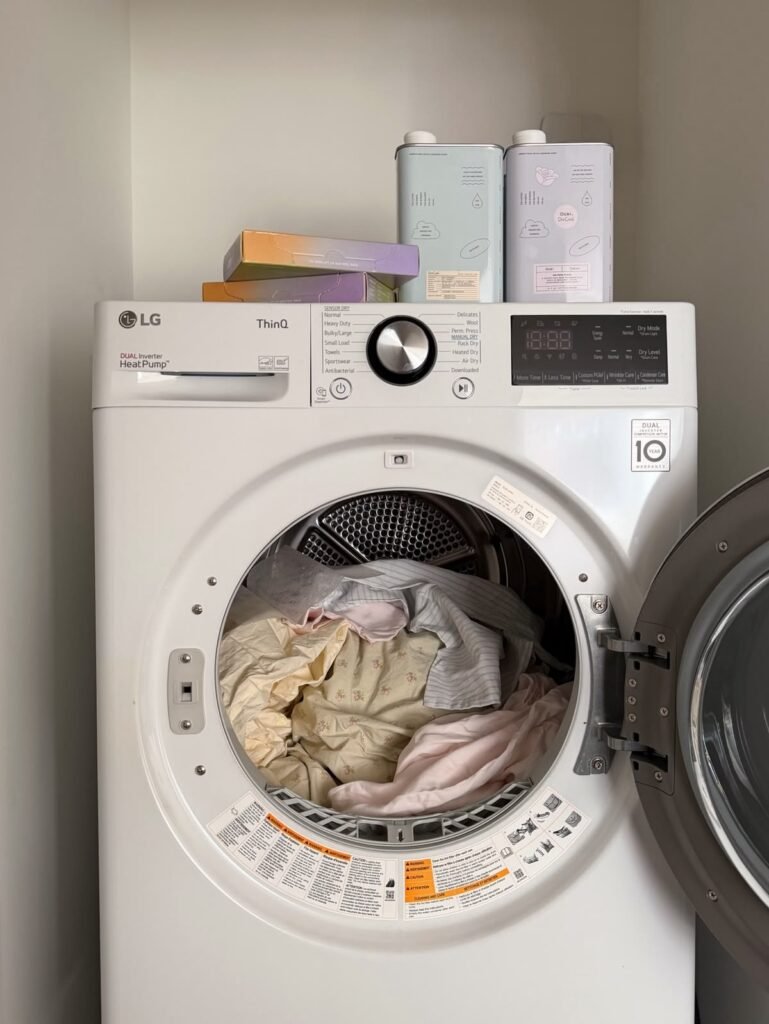
A dryer that gets hot but leaves your clothes damp can be frustrating. You may notice that the drum feels warm and the dryer seems to be running normally, yet your clothes still need another cycle before they are completely dry.
So, why is my dryer getting hot but not drying clothes?
In many cases, the problem is related to restricted airflow rather than a lack of heat. A clogged lint filter, blocked dryer vent, crushed exhaust hose, overloaded drum, or weak airflow can prevent moisture from leaving the dryer properly. Other problems, such as a faulty moisture sensor or blower wheel, can also affect drying performance.
The good news is that several basic checks can help you identify the cause before you consider a repair.
Quick Answer: What Causes a Dryer to Heat but Not Dry?
A dryer needs more than heat to dry clothes effectively. It also needs proper airflow and enough room for clothes to tumble.
Common causes include:
- A clogged lint filter
- Blocked or restricted dryer vent
- Crushed or kinked exhaust hose
- Lint buildup inside the vent system
- An overloaded dryer
- Clothes entering the dryer too wet
- A faulty blower wheel
- Dirty or malfunctioning moisture sensors
- Problems with certain internal components
If your dryer is producing heat but moisture cannot escape efficiently, clothes may remain damp even after a complete cycle.
Why Does My Dryer Heat but Not Dry Clothes?
A dryer works by moving warm air through wet clothing and then exhausting the humid air outside. This continuous movement of air helps remove moisture from the fabric.
When airflow becomes restricted, the dryer may still produce heat, but the moisture has nowhere to go. The result is longer drying times and clothes that remain damp.
This is why why does my dryer heat but not dry clothes is often an airflow question rather than simply a heating problem.
If your dryer used to dry clothes normally but suddenly started taking much longer, check the lint filter and exhaust system first.
Check the Lint Filter First
The lint filter is one of the easiest things to check. Lint naturally collects on the screen during every drying cycle, and a heavily blocked filter can reduce airflow.
Before checking or cleaning the filter, turn the dryer off.
Remove the lint screen and clear away any visible lint. If you notice a sticky or waxy coating from dryer sheets or fabric softener, wash the screen with warm water and mild soap. Let it dry completely before putting it back.
Cleaning the lint filter after every load is a simple habit that helps maintain proper airflow.
However, remember that a clean lint filter does not necessarily mean the entire exhaust system is clear. Lint can still accumulate deeper inside the vent.
Inspect the Dryer Vent and Exhaust Hose
If you’re wondering why is my dryer hot but clothes are still damp, the exhaust system is one of the first places to investigate.
The dryer needs to push warm, moist air through the exhaust system. If the hose or vent is restricted, drying performance can decrease significantly.
Look for:
- A crushed exhaust hose
- Sharp bends or kinks
- Visible lint build up
- A blocked exterior vent
- Weak airflow at the outside vent
- A vent flap that does not open properly
One common warning sign is that your dryer gets hot but takes hours to dry clothes.
If drying time has gradually increased, don’t assume that the dryer simply needs more time. Restricted airflow can be the reason the appliance is struggling.
Avoid damaging the vent or taking apart appliance components if you’re unsure how to inspect them safely.
Make Sure You Are Not Overloading the Dryer
An overloaded dryer may produce plenty of heat but still struggle to dry the entire load.
Clothes need enough space to tumble freely. When the drum is packed too tightly, warm air cannot circulate effectively between the fabrics.
Try running a smaller load and see whether drying improves.
You can also separate very heavy items, such as towels and blankets, from lighter clothing when practical. Always follow the load recommendations in your dryer’s owner’s manual.
If a smaller load dries normally but a full load does not, load size and airflow may be contributing to the problem.
Check How Wet the Clothes Are Before Drying
Sometimes the dryer isn’t the main problem.
If clothes come out of the washing machine unusually wet, the dryer has to remove much more moisture than normal.
Check whether the washer is completing its spin cycle properly. An unbalanced load, drainage problem, incorrect cycle, or washer malfunction can leave clothes excessively wet.
If possible, run the washer’s appropriate spin cycle and compare the moisture level of the clothes afterward.
Clothing should be damp after washing, but it should not be excessively soaked before going into the dryer.
Check the Dryer Blower and Airflow
The blower wheel helps move air through the dryer and exhaust system. If it is damaged, obstructed, or not operating correctly, the dryer may struggle to move enough air.
You may notice:
- Clothes taking much longer to dry
- Weak exhaust airflow
- Unusual rattling or vibrating sounds
- The dryer becoming hotter than usual
- Drying performance becoming inconsistent
A blower problem generally requires access to internal parts of the appliance. Because dryers contain electrical components and moving parts, internal diagnosis is best handled by someone familiar with dryer repairs.
Could the Moisture Sensor Be Causing the Problem?
Many modern dryers use moisture sensors to determine when clothing is dry. These sensors can become coated with residue over time.
A sensor-related issue may cause the dryer to end a cycle too early, leaving clothes damp.
If your dryer has sensor bars inside the drum, check your owner’s manual for their location and cleaning instructions. Keeping the sensor area clean can help maintain accurate moisture detection.
However, a moisture sensor problem isn’t the only possibility. If the dryer has weak airflow, cleaning the sensors alone will not solve the underlying issue.
What If the Dryer Heats Normally but Clothes Remain Wet?
If your dryer heats normally but clothes remain wet, pay attention to other symptoms.
Heat but weak airflow
This can point toward:
- A restricted vent
- Blocked exhaust hose
- Lint build up
- Blower-related problems
Heat and strong airflow but clothes remain damp
Consider:
- An oversized load
- Clothes entering the dryer too wet
- Moisture-sensor problems
- Other internal dryer issues
Very high heat and long drying times
This deserves attention because restricted airflow can cause the dryer to retain more heat than it should.
The symptoms can help narrow down the likely cause without immediately replacing parts.
How to Fix a Dryer That Is Heating but Not Drying
If you’re looking for how to fix a dryer that is heating but not drying, start with the simplest checks.
1. Clean the lint filter
Remove lint after every load and clean away any residue that may restrict airflow.
2. Check the exhaust hose
Make sure the hose is not crushed, sharply bent, or visibly blocked.
3. Inspect the exterior vent
Check whether the outside vent flap opens properly when the dryer is operating and whether it is obstructed by lint or debris.
4. Try a smaller load
Give clothes enough room to tumble and allow warm air to circulate.
5. Check the washer’s spin cycle
If clothing is coming out of the washer excessively wet, investigate the washer as well.
6. Pay attention to airflow
Weak exhaust airflow can indicate a restriction that needs further investigation.
7. Consider professional diagnosis
If basic cleaning and airflow checks do not improve drying performance, an internal component may need to be tested.
Do not bypass safety switches or attempt electrical repairs unless you have the appropriate knowledge and equipment.
When Should You Stop Troubleshooting?
Some dryer problems should not be treated as routine maintenance.
Stop using the dryer and arrange for professional Crews if you notice:
- A burning smell
- Smoke
- Sparks
- Melted or damaged wiring
- Repeated breaker trips
- Extremely excessive heat
- Unusual electrical sounds
- Persistent problems after basic airflow checks
A dryer combines heat, electricity, moving components, and lint. Ignoring warning signs can turn a relatively simple problem into a more serious safety issue.
How to Prevent Long Dryer Drying Times
Regular maintenance can help your dryer continue working efficiently.
Follow these simple habits:
- Clean the lint filter after every load.
- Avoid overloading the drum.
- Keep the area around the dryer clear.
- Check the exhaust hose for crushing or kinks.
- Keep the exterior vent free from obvious obstructions.
- Pay attention to changes in drying time.
- Make sure clothes are properly spun before drying.
- Follow the maintenance recommendations in the owner’s manual.
A sudden increase in drying time is worth investigating rather than simply running additional cycles.
When Professional Dryer Repair Makes Sense
If your dryer continues heating but cannot properly dry clothes after you’ve checked the lint filter, load size, and visible exhaust path, the problem may involve an internal component. Understanding dryer repair costs can also help you decide whether repairing or replacing the appliance makes more sense. The final cost can vary depending on the faulty part, labour, dryer type, and overall condition of the appliance.
Professional diagnosis can help determine whether the issue involves airflow, the blower system, moisture sensing, electrical components, or another part.
Getting the actual cause identified is generally better than replacing parts based only on symptoms.
Final Thoughts
A dryer that gets hot but doesn’t dry clothes does not necessarily have a heating problem. In many cases, the real issue is airflow.
Start by checking the lint filter, exhaust hose, exterior vent, and load size. Also consider whether your washer is leaving clothes wetter than usual.
If the dryer continues to perform poorly or shows signs such as excessive heat, burning smells, smoke, sparks, or electrical problems, stop using it and have the appliance properly inspected.
Understanding the symptoms can help you find the likely cause and avoid unnecessary part replacements.
Frequently Asked Questions
Why is my dryer hot but clothes are still damp?
A restricted vent, clogged lint filter, overloaded drum, poor airflow, or another dryer problem can cause clothes to remain damp even when the appliance produces heat.
Why does my dryer heat but not dry clothes?
Drying requires both heat and airflow. If humid air cannot escape through the exhaust system, the dryer may heat normally while drying clothes very slowly.
Why does my dryer get hot but take hours to dry?
A blocked or restricted exhaust system is a common possibility. Check the lint filter, exhaust hose, and exterior vent for airflow restrictions.
Can a clogged dryer vent cause clothes to stay wet?
Yes. A restricted vent can reduce airflow and prevent moisture from leaving the dryer efficiently, resulting in longer drying times.
Can an overloaded dryer cause clothes to stay damp?
Yes. An overloaded drum can prevent clothes from tumbling properly and reduce airflow between garments.
Should I use a dryer that is getting extremely hot?
If the dryer becomes unusually hot or you notice a burning smell, smoke, sparks, or other abnormal behaviuor, stop using it and arrange for professional inspection.
When should I call a dryer repair technician?
If cleaning the lint filter, checking the exhaust path, reducing the load, and checking the washer’s spin performance do not resolve the problem, professional diagnosis may be appropriate.