
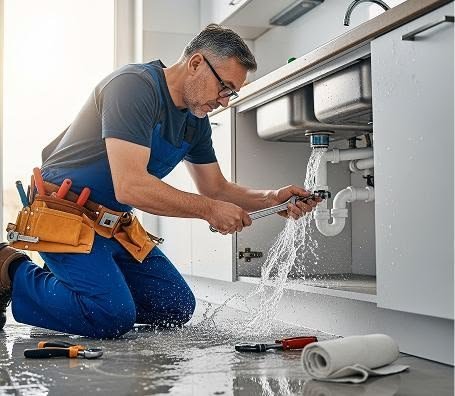
A leaking garbage disposal can quickly turn into a messy problem under your kitchen sink. If you notice water dripping from the bottom of the disposal, the first step is not to start taking the unit apart. Instead, turn off the power and find exactly where the water is coming from.
A leak may be caused by a loose drain connection, damaged gasket, sink flange, dishwasher hose, worn seal, or a problem inside the disposal itself. Some leaks are relatively simple to repair, while others can mean the disposal needs to be replaced.
Knowing What to Do If Garbage Disposal Is Leaking From the Bottom? can help you avoid unnecessary repairs and prevent water damage to the cabinet below your sink.
Turn Off the Garbage Disposal Before Inspecting It
Safety should come first whenever water is leaking around an electrical appliance.
Turn off the garbage disposal using the wall switch and, if you need to inspect or work around the unit, switch off the appropriate circuit breaker. Never put your hand inside the disposal, even if it appears to be turned off.
Once the power is off, remove items stored under the sink and dry the area around the disposal. This makes it much easier to determine where fresh water is coming from.
If water has reached electrical connections or you notice sparks, a burning smell, or other electrical problems, stop troubleshooting and have the appliance inspected by a qualified professional.
Why Is My Garbage Disposal Leaking Water From the Bottom?
Seeing water underneath the disposal does not automatically mean the disposal itself is damaged. Water can run along the outside of the unit or nearby pipes before dripping onto the cabinet floor.
Some common causes include:
A Failed Internal Seal
Garbage disposals contain seals that help keep water inside the grinding chamber. Over time, these seals can wear out or become damaged.
If water is coming directly through the bottom of the disposal housing rather than from a pipe or connection, an internal seal problem may be responsible.
A Loose Drain Connection
The discharge pipe connects the disposal to your home’s drain system. A loose connection or damaged gasket can allow water to escape.
Because the connection is close to the bottom of the disposal, the leak may appear to be coming from the unit itself.
A Leaking Sink Flange
The flange connects the garbage disposal to the bottom of the sink. If its seal has deteriorated, water can leak around the top of the disposal and travel downward.
This is another reason it is important to locate the exact starting point of the leak before replacing the disposal.
A Damaged Dishwasher Connection
If your dishwasher drains through the garbage disposal, the dishwasher hose and its connection can also be potential leak points.
Water may run down the side of the disposal and eventually collect underneath it.
Cracked or Corroded Housing
An older disposal can develop corrosion or physical damage. If the housing itself is cracked, repairing the leak may not be practical. That’s why it’s also important to learn how to fix a garbage disposal, identify common problems, and know when a repair is possible versus when replacement is the better option.
In that situation, replacement is usually a more reliable solution than attempting to seal the damaged housing.
What Causes a Garbage Disposal to Leak Underneath?
There are several reasons a garbage disposal may leak underneath the sink. Age is one factor because seals and gaskets can deteriorate over time.
Normal vibration can also contribute to loose connections. Improper installation, damaged plumbing components, corrosion, and internal seal failure are other possibilities.
The important thing is to avoid assuming that the disposal needs replacement simply because water is collecting underneath it.
A proper diagnosis starts by determining where the water first appears.
How to Find the Source of the Leak
Before trying to repair anything, identify the exact location of the leak.
Start by drying the entire area underneath the sink. Then watch for fresh water while adding a small amount of water to the sink.
Check these areas carefully:
- The sink flange where the disposal attaches to the sink
- The dishwasher drain hose connection
- The discharge pipe
- Drain pipe connections
- The outside of the disposal housing
- The bottom of the disposal itself
If the surrounding plumbing remains dry but water begins appearing directly from the bottom of the disposal, an internal problem becomes more likely.
This simple inspection can help prevent replacing a disposal when the actual problem is only a loose or damaged plumbing connection.
How to Fix Garbage Disposal Leaking From the Bottom
The right repair depends on the source of the leak.
If you are dealing with an external plumbing connection, the repair may involve tightening the connection or replacing a damaged gasket, hose, or other component.
For example, a leaking dishwasher hose may need to be replaced, while a loose drain connection may need to be properly secured.
However, if the water is coming directly from the bottom of the disposal housing, the problem may be inside the unit. Internal seal failures can be more difficult to repair and may require the disposal to be removed or replaced.
Avoid opening the disposal or attempting electrical repairs unless you have the appropriate experience. A garbage disposal contains electrical and mechanical components that can be dangerous to work on without proper knowledge.
Can a Garbage Disposal Leaking From the Bottom Be Repaired?
Sometimes, yes. Whether it can be repaired depends on where the leak originates.
An external leak from a drain connection, dishwasher hose, or sink flange can often be repaired without replacing the entire disposal.
An internal leak is different. If the internal seal has failed, the disposal is badly corroded, or the housing is cracked, replacement may be more practical.
The age and overall condition of the disposal should also be considered. A relatively new unit with a simple connection problem may be worth repairing, while an older disposal with multiple issues may make replacement a better long-term choice.
How to Tell If Garbage Disposal Seal Is Leaking
One clue is the location of the water.
If the sink flange, dishwasher hose, and drain connections are dry, but water appears directly underneath the disposal housing, an internal seal may be leaking.
You may also notice the leak becomes more obvious after using the disposal or running water through the sink.
However, these symptoms do not confirm an internal seal failure by themselves. Water can travel from another location and make the source difficult to see.
If you cannot confidently identify where the water starts, professional diagnosis can help determine whether the disposal needs a repair or replacement.
How to Stop Water From Leaking Under Garbage Disposal
The safest approach is to work from the outside in.
First, turn off the power and dry the cabinet. Next, inspect the sink flange, dishwasher hose, discharge pipe, and other visible connections.
If one of these components is clearly leaking, repair or replace the damaged part as appropriate.
If all external connections are dry and water continues to come from the disposal itself, avoid repeatedly running the unit. Continued operation can allow more water to accumulate underneath the sink and potentially cause additional damage.
At that point, the disposal may need professional inspection to determine whether an internal repair is possible or replacement is necessary.
Garbage Disposal Leaking From Bottom When Running
A disposal that only leaks when it is running can be particularly confusing.
When the disposal operates, vibration and water movement can expose a weak connection or damaged seal that does not leak noticeably while the unit is idle.
If you notice water only during operation, turn the disposal off and inspect the surrounding connections once the area is dry.
Do not repeatedly run the disposal simply to test the leak, especially if water is getting close to electrical components.
Identifying the source safely is more important than confirming the problem by repeatedly operating the appliance.
Garbage Disposal Leaking From Bottom Under Sink: When Should You Replace It?
Replacement may make more sense when the disposal has a cracked housing, significant corrosion, a serious internal leak, or several recurring problems.
You should also consider the disposal’s age and overall condition. If the motor is already noisy, the unit frequently jams, or other components are failing, putting money into one repair may not be the best long-term solution.
On the other hand, replacing the entire disposal is not always necessary. If the leak comes from an accessible plumbing connection and the disposal otherwise works properly, repairing that connection may be enough.
The goal is to fix the actual source of the leak rather than automatically replacing the appliance.
Common Mistakes to Avoid
When dealing with a leaking garbage disposal, avoid these common mistakes:
Ignoring a small leak: Even a slow leak can damage the cabinet and surrounding materials over time.
Assuming the disposal is automatically defective: Water can come from the sink flange, drain pipe, or dishwasher connection.
Continuing to use a leaking unit: This can increase water exposure and make the problem worse.
Putting your hand inside the disposal: Never reach into the grinding chamber.
Replacing the unit without diagnosing the leak: A simple external connection may be responsible.
Attempting electrical repairs without experience: Water and electricity can create a serious safety hazard.
When to Call a Professional
A professional inspection is a good idea when the leak source is difficult to identify or the problem appears to be coming from inside the disposal.
Professional help is especially appropriate if:
- Water is reaching electrical connections.
- The disposal housing is cracked.
- The unit has significant corrosion.
- The disposal repeatedly leaks after a repair.
- You suspect an internal seal failure.
- You are uncomfortable working under the sink.
- The disposal has electrical problems in addition to the leak.
A technician can determine whether the issue is repairable and help you avoid replacing a disposal unnecessarily.
Final Thoughts
A garbage disposal leaking from the bottom should not be ignored, but it does not automatically mean you need a new unit. Start by turning off the power and locating the exact source of the water.
Check the visible plumbing connections before assuming there is an internal disposal failure. A loose connection, damaged hose, or worn gasket may be relatively straightforward to address. If water is coming directly through the bottom of the disposal, however, the problem may involve an internal seal or damaged housing.
When the source is unclear or water is near electrical components, professional diagnosis is the safest option. A proper inspection can help determine whether repairing the disposal or replacing it is the better choice.
Frequently Asked Questions
Why is my garbage disposal leaking water from the bottom?
A leak from the bottom may be caused by an internal seal failure, cracked housing, corrosion, or water coming from another connection and traveling downward. Check the sink flange, dishwasher hose, discharge pipe, and other connections before assuming the disposal itself has failed.
Can a garbage disposal leaking from the bottom be repaired?
It depends on the source. External plumbing leaks can often be repaired, while an internal seal failure or cracked disposal housing may make replacement more practical. The age and overall condition of the unit should also be considered.
Is it safe to use a garbage disposal that is leaking?
It is best to stop using a leaking disposal until you identify the source. This is especially important if water is reaching electrical connections. Turn off the power and inspect the unit safely before operating it again.
How do I tell if my garbage disposal seal is leaking?
If the visible plumbing connections are dry but water appears directly from the bottom of the disposal housing, an internal seal may be responsible. A professional inspection may be needed to confirm the source.
How do I stop water from leaking under my garbage disposal?
Turn off the power, dry the area, and identify where the water starts. Inspect the sink flange, dishwasher hose, drain connections, and disposal housing. Repair the failed external component or have the disposal inspected if the leak appears to originate internally.
Why does my garbage disposal leak only when running?
Operation can expose leaks that are not obvious while the disposal is idle. Vibration and water movement may reveal a weak connection or internal seal problem. Avoid repeatedly running the disposal to test the leak.
Should I replace a garbage disposal that is leaking from the bottom?
Not necessarily. If the problem is a loose connection or damaged external component, repair may be enough. Replacement is more likely to make sense when the housing is cracked, the unit is badly corroded, or an internal failure makes repair impractical.
How much does it cost to repair a leaking garbage disposal?
The cost depends on the source of the leak, required parts, labour, disposal model, and whether the unit needs replacement. An accurate estimate requires identifying the specific problem first.