
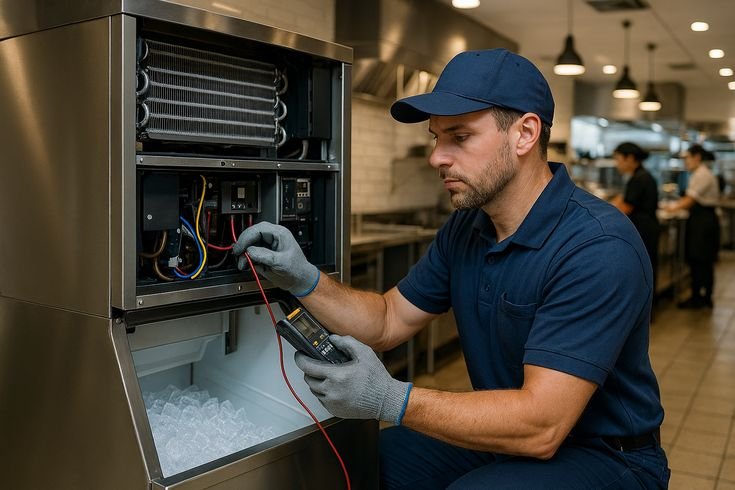
An ice maker that suddenly stops producing ice can be frustrating, especially when the refrigerator is otherwise working normally. Before assuming the ice maker needs to be replaced, check a few common causes first.
Problems such as an incorrect freezer temperature, switched-off ice maker, restricted water supply, clogged filter, frozen fill tube, or mechanical failure can all stop ice production. Manufacturer troubleshooting guides recommend starting with basic checks before moving on to service.
So, what to do if my ice maker stopped making ice? Start by checking whether the ice maker is turned on, the freezer is cold enough, water is reaching the refrigerator, and the ice maker is free of obvious blockages.
Why Has My Ice Maker Stopped Making Ice?
If you’re wondering why has my ice maker stopped making ice, there may be more than one possible explanation. The ice maker depends on the right temperature, water supply, and working mechanical components to complete its ice-making cycle.
Common causes include:
- Ice maker accidentally switched off
- Freezer temperature too warm
- Restricted or interrupted water supply
- Kinked water line
- Clogged or incorrectly installed water filter
- Frozen water inlet or fill tube
- Ice blockage inside the bin or mechanism
- Faulty water inlet valve
- Failed motor, sensor, or other internal component
For example, a refrigerator can be cold enough to keep food frozen while still having an issue with the ice maker’s water supply or internal mechanism. GE and Whirlpool both recommend checking power, temperature, water supply, and filter-related issues when an ice maker stops producing ice.
What Causes an Ice Maker to Stop Working?
Understanding what causes an ice maker to stop working can make troubleshooting much easier.
The Ice Maker Is Turned Off
Some refrigerators allow the ice maker to be disabled from a switch, control panel, or shutoff arm. It can sometimes be turned off accidentally while cleaning or moving items around the freezer.
Check the controls and make sure ice production is enabled. The exact procedure varies by model, so your owner’s manual is the best reference.
The Freezer Is Too Warm
Ice production depends heavily on freezer temperature. If the freezer is not reaching its recommended temperature, water may not freeze properly.
Many manufacturers recommend a freezer setting around 0°F (-18°C), although you should follow the temperature recommendation for your specific refrigerator.
The Water Supply Is Restricted
The ice maker needs a reliable water supply. A closed valve, kinked line, clogged filter, or water-pressure problem can prevent the ice mold from filling.
The Fill Tube Is Frozen
A frozen fill tube can prevent water from reaching the ice maker. This is especially important if you can see frost or ice around the water inlet area.
An Internal Component Has Failed
If the ice maker has power, the freezer is cold enough, and water is available but the unit still does not cycle correctly, an internal component may be defective. A motor, sensor, valve, wiring connection, or control component may require professional diagnosis.
What to Check When an Ice Maker Stops Working
If you’re asking what to check when an ice maker stops working, work through these basic checks before assuming a major repair is needed.
1. Make Sure the Ice Maker Is On
Check the refrigerator’s control panel, switch, or ice maker shutoff mechanism. Make sure it has not been accidentally disabled.
2. Check the Freezer Temperature
Look at the freezer temperature display if your refrigerator has one. If it is warmer than the manufacturer’s recommended setting, the ice maker may not produce ice properly.
Also consider whether the freezer has recently been overloaded or whether the door has been left open frequently.
3. Inspect the Ice Bin
Look for large clumps or ice blocking the mechanism. If the bin is packed with stuck ice, remove the accessible ice carefully.
Do not force the ice maker arm, tray, or other moving parts.
4. Check the Water Supply
Make sure the refrigerator’s water supply is turned on. Look behind the refrigerator for an accessible water line and check for obvious kinks.
A restricted water supply can result in little or no ice production.
5. Check the Water Filter
If your refrigerator uses a water filter, make sure it is installed correctly and is not overdue for replacement. A restricted filter can reduce water flow to the ice maker.
6. Look for a Frozen Fill Tube
If you see excessive ice around the water inlet, the fill tube may be frozen. Avoid using sharp objects to chip away at the ice because you could damage the refrigerator or water line.
Also Read: How to fix leaking ice maker.
How Do I Fix an Ice Maker That Is Not Making Ice?
If you’re wondering how do I fix an ice maker that is not making ice, start with the simple solutions above.
First, confirm that the ice maker is turned on and that the freezer is maintaining the correct temperature. Then check the water supply, filter, and ice bin.
If your model has a manufacturer-approved reset or test procedure, you can follow the instructions in the owner’s manual. Some refrigerators have a dedicated test button, but the location and procedure differ between models. Samsung, for example, provides model-specific reset instructions and warns against repeatedly activating the test function when the ice tray contains water or ice.
After correcting a simple issue or resetting the ice maker, give it time to complete its cycle. Ice production does not necessarily restart immediately.
Avoid removing electrical covers or attempting to bypass safety components. If the problem involves wiring, internal electrical parts, or a component that requires disassembly, professional service is safer.
Why Is My Ice Maker Not Getting Water?
If you’re asking why is my ice maker not getting water, start with the refrigerator’s water supply.
Check whether:
- The water shutoff valve is fully open
- The supply line is kinked
- The water filter is clogged or improperly installed
- The fill tube is frozen
- Water pressure is adequate
- The refrigerator is receiving water normally
If the refrigerator’s water dispenser also has weak or no water flow, that can provide an important clue that the issue may be related to the water supply rather than the ice maker itself.
A faulty water inlet valve can also prevent water from entering the ice maker. Whirlpool identifies restricted water supply and a defective inlet valve among possible causes of ice-making problems.
Why Is My Ice Maker Frozen and Not Making Ice?
If you’re wondering why is my ice maker frozen and not making ice, look for ice build up around the fill tube, ice mold, or other parts of the mechanism.
A frozen inlet tube can stop water from reaching the ice mold. Excessive frost can also indicate a temperature, airflow, sealing, or other refrigerator problem.
Do not use knives, screwdrivers, or other sharp objects to remove stubborn ice. You could puncture a water line or damage the ice maker.
If the ice maker repeatedly freezes after being cleared, the underlying problem should be diagnosed rather than repeatedly thawing it.
How Do I Get My Ice Maker to Start Making Ice Again?
If you’re asking How do I get my ice maker to start making ice again?, use this quick checklist:
- Confirm the ice maker is switched on.
- Check the freezer temperature.
- Make sure the ice bin is correctly positioned and free of blockages.
- Check the refrigerator’s water supply.
- Inspect the accessible water line for kinks.
- Check the water filter.
- Look for a frozen fill tube.
- Follow your manufacturer’s reset instructions if your model provides them.
- Allow sufficient time for a new ice-making cycle.
A reset can sometimes resolve a temporary control issue, but it cannot repair a failed motor, valve, sensor, wiring connection, or other defective component.
When Should You Call an Appliance Repair Professional?
Basic troubleshooting is reasonable when the problem involves a setting, accessible blockage, filter, or water-supply issue. However, professional diagnosis is a better choice when the simple checks do not solve the problem.
Consider professional service if:
- The ice maker repeatedly stops working
- The ice maker does not respond to its controls
- Water is not entering despite a normal water supply
- The fill tube repeatedly freezes
- The ice maker motor does not cycle
- You notice damaged wiring
- The refrigerator has an electrical problem
- Water is leaking near electrical components
- The freezer is not maintaining the proper temperature
A technician can test the relevant components and determine whether the issue is with the ice maker, water valve, temperature system, wiring, or another part of the refrigerator.
For homeowners who need appliance troubleshooting or repair, Professional Crews can help diagnose persistent ice maker problems and determine the appropriate repair.
How to Prevent Ice Maker Problems
Regular maintenance can help reduce some common ice-making problems.
Keep the freezer at the manufacturer’s recommended temperature and avoid blocking internal air vents with food. Replace the water filter according to your refrigerator manufacturer’s instructions, and make sure the filter is installed correctly.
Keep the ice bin reasonably clear and remove large clumps before they interfere with the mechanism.
It’s also worth paying attention to changes in ice production. Small or hollow cubes, slow production, or recurring freezing can indicate a developing water-flow or temperature problem. Addressing those symptoms early may help prevent a more significant issue later.
Final Thoughts
When an ice maker stops making ice, the problem is not always a major repair. Start with the basics: check the ice maker setting, freezer temperature, water supply, filter, ice bin, and fill tube.
If the ice maker remains inactive after these checks, avoid repeatedly forcing or resetting it. The problem may involve a water inlet valve, motor, sensor, wiring, or another internal component.
Knowing what to do if my ice maker stopped making ice can help you identify simple problems quickly while recognizing when professional appliance repair is the safer option.
Frequently Asked Questions
Why has my ice maker stopped making ice?
Common causes include an ice maker that has been switched off, a freezer that is too warm, restricted water flow, a clogged filter, a frozen fill tube, or a failed internal component.
How do I fix an ice maker that is not making ice?
Check that the ice maker is turned on, verify the freezer temperature, inspect the ice bin, check the water supply and filter, and look for a frozen fill tube. If these checks do not solve the problem, professional diagnosis may be necessary.
Why is my ice maker not getting water?
A closed water valve, kinked supply line, clogged filter, frozen fill tube, low water pressure, or faulty inlet valve can restrict water from reaching the ice maker.
Why is my ice maker frozen and not making ice?
A frozen fill tube or excessive ice build up can prevent water from reaching the ice mold. If the problem keeps returning, there may be an underlying temperature, water-flow, sealing, or component issue.
Can I reset my ice maker?
Many refrigerator models have a reset or test procedure, but the process varies by manufacturer and model. Follow the instructions in your owner’s manual rather than using a generic reset procedure.
How do I get my ice maker to start making ice again?
Make sure the ice maker is on, the freezer is cold enough, the water supply is working, the filter is properly installed, and there are no ice blockages. If your model supports a reset, follow the manufacturer’s instructions and allow time for normal ice production to resume.