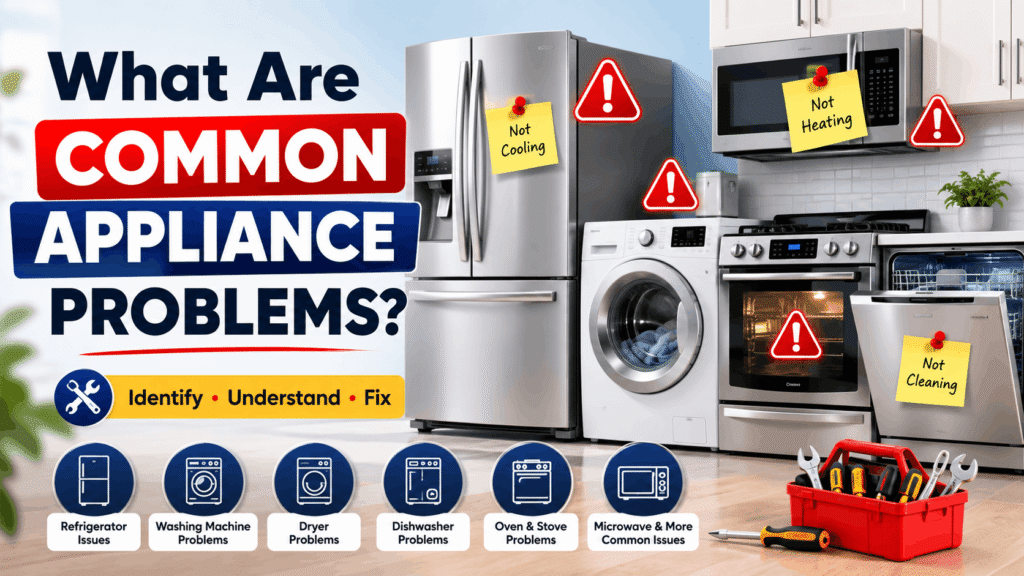

A refrigerator that suddenly stops keeping food cold can be frustrating, especially when the freezer still seems to be working. The good news is that the problem does not always mean your refrigerator needs to be replaced.
What Can Cause a Fridge to Stop Being Cold? Common causes include incorrect temperature settings, blocked air vents, dirty condenser coils, damaged door seals, excessive frost, fan problems, and issues with the compressor or sealed cooling system.
Before replacing expensive parts, start with a few simple checks. Some cooling problems can be corrected with basic maintenance, while others require professional diagnosis.
What Is the Most Common Cause of a Fridge Not Cooling?
There is no single cause that applies to every refrigerator, but airflow and maintenance problems are among the first things worth checking. A refrigerator can struggle to cool properly when its vents are blocked, the condenser area is heavily dirty, the door gasket does not seal, or frost is restricting airflow.
Temperature settings should also be checked first. The FDA recommends keeping a refrigerator at 40°F (4°C) or below and the freezer at 0°F (-18°C). An appliance thermometer is a better way to verify the actual temperature than relying only on the refrigerator’s display or how cold the food feels.
If these basic checks do not solve the problem, the refrigerator may have a faulty fan, defrost component, sensor, control board, compressor, or sealed-system issue.
9 Common Reasons Your Refrigerator Is Not Cooling
1. The Temperature Setting Is Too Warm
The temperature control may have been accidentally adjusted, especially after cleaning or moving items inside the refrigerator.
Check the refrigerator and freezer settings and make sure they match the manufacturer’s recommendations. After changing the setting, allow the appliance time to stabilize before deciding that the adjustment did not work.
An appliance thermometer can give you a more reliable reading. The FDA recommends maintaining the refrigerator at 40°F or below for food safety.
2. Food Is Blocking the Air Vents
Refrigerators depend on airflow to distribute cold air throughout the compartments. If containers or food packages are pushed against the vents, cold air may not circulate properly.
This can create a common situation where one section feels cold while another remains noticeably warmer.
Move large containers away from the vents and avoid packing the refrigerator so tightly that air cannot move freely. The FDA also recommends avoiding overpacking for this reason.
3. The Condenser Coils Are Dirty
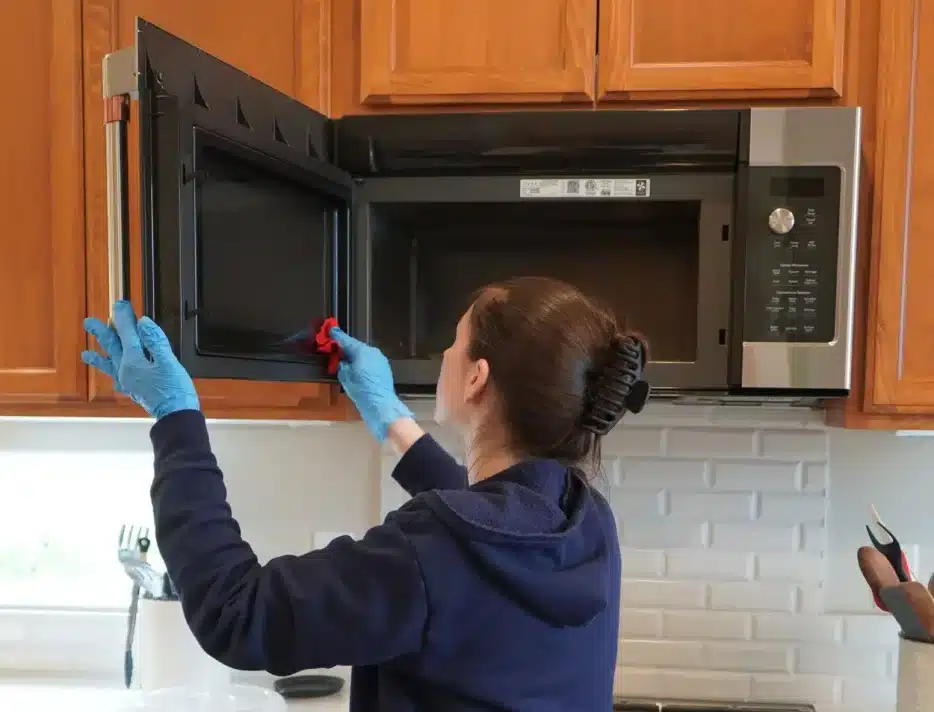
Condenser coils help the refrigerator release heat. When they become covered with dust, pet hair, or debris, the appliance may have difficulty getting rid of heat efficiently.
Depending on the model, the coils may be located underneath, behind, or in another accessible area. Always check the owner’s manual before cleaning around the appliance.
If the refrigerator has accessible coils, cleaning them according to the manufacturer’s instructions can improve airflow and heat transfer.
4. The Door Gasket Is Damaged
The rubber gasket around the refrigerator door creates a seal that keeps cold air inside. If it is cracked, loose, warped, or dirty, warm air can enter continuously.
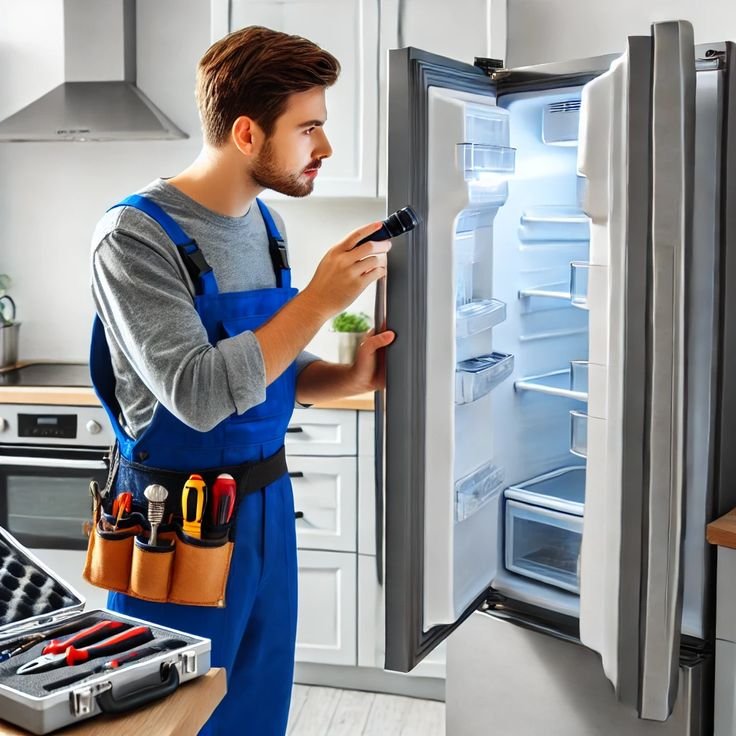
Look around the entire gasket for visible gaps or damage. Also make sure nothing inside the refrigerator is preventing the door from closing completely.
A leaking door seal can make the refrigerator run more frequently while still struggling to maintain the correct temperature.
Also Read:How to fix refrigerator door gasket
5. There Is Too Much Frost or Ice
Excessive frost inside the freezer can restrict the airflow needed to cool the refrigerator compartment.
This is particularly important when the freezer is cold but the refrigerator is warm. Frost can form around the evaporator area and interfere with normal air circulation.
If frost repeatedly returns after being removed, the underlying problem may involve the defrost system rather than simply an accumulation of ice.
Never use a sharp object to break through ice because you could damage components or create a safety hazard.
6. The Evaporator Fan Is Not Working Properly
The evaporator fan helps move cold air through the refrigerator. If the fan stops working, airflow can become weak or disappear.
Possible signs include:
- The freezer remains cold while the refrigerator is warm
- Little or no air comes from the refrigerator vents
- The appliance makes unusual fan noises
- Cooling performance changes when the door is opened or closed
A failed fan may require replacement, and accessing the component varies considerably by refrigerator model.
7. The Condenser Fan Has Failed
The condenser fan helps move air around the condenser area and assists with heat removal.
If the fan is not operating correctly, the refrigerator may become warmer than normal or run for long periods without maintaining the desired temperature.
Because fan problems involve electrical and mechanical components, professional diagnosis may be appropriate when basic maintenance does not resolve the issue.
8. The Defrost System Has a Problem
Modern refrigerators automatically manage frost buildup. If a defrost heater, sensor, thermostat, or control component fails, frost can gradually accumulate around the evaporator.
At first, the refrigerator may appear to cool normally. Over time, however, airflow can become increasingly restricted and temperatures may rise.
Repeated frost buildup is therefore worth investigating rather than simply treating the visible ice over and over again.
9. The Compressor or Sealed System Has a Problem
The compressor and sealed cooling system are critical to refrigeration. Problems involving the compressor, refrigerant circuit, or a restriction in the sealed system are more complex than cleaning a coil or adjusting a thermostat.
These problems require proper testing and specialized equipment.
If the refrigerator is running continuously but temperatures remain too high after basic troubleshooting, a professional diagnosis can help determine whether the issue is worth repairing.
Why Is My Refrigerator Running but Not Cooling?
If your refrigerator is running but not cooling, the sound of the compressor or fan does not necessarily mean the entire cooling system is working correctly.
Possible causes include:
- Dirty condenser components
- Blocked vents
- Frost buildup
- Evaporator fan problems
- Condenser fan problems
- Defrost-system failure
- Door gasket leaks
- Compressor or sealed-system problems
Start with the simplest possibilities. Check the temperature setting, make sure the vents are clear, inspect the door gasket, and look for excessive frost.
If the refrigerator continues running without reaching a safe temperature, avoid assuming that the compressor is automatically defective. Several different problems can produce similar symptoms.
Why Is My Freezer Cold but My Fridge Warm?
This is one of the most common refrigerator troubleshooting questions.
When the freezer is cold but the refrigerator compartment is warm, the problem may be related to how cold air moves from the freezer into the refrigerator section.
Common possibilities include:
- Blocked air vents
- Excessive frost
- Evaporator fan failure
- Air damper problems
- Defrost-system issues
Start by checking whether food is blocking the vents and whether there is heavy frost inside the freezer.
If the freezer is maintaining a cold temperature but little or no cold air reaches the refrigerator compartment, professional diagnosis may be necessary.
What Should I Do If My Fridge Is Not Cooling?
If you are wondering what should I do if my fridge is not cooling, follow these basic troubleshooting steps.
1. Check the Temperature
Verify the refrigerator is set correctly. Use an appliance thermometer when possible.
2. Clear the Air Vents
Move food away from vents and make sure cold air can circulate.
3. Check the Door Seal
Look for cracks, gaps, dirt, or sections of gasket that are pulling away from the door.
4. Look for Excessive Frost
Inspect the freezer for heavy ice buildup that could be restricting airflow.
5. Check the Condenser Area
If your refrigerator’s design allows safe access, inspect the condenser area for excessive dust and debris and clean it according to the manufacturer’s instructions.
6. Monitor the Temperature
Do not rely only on how food feels. The FDA recommends keeping the refrigerator at or below 40°F.
7. Get Professional Help When Necessary
If basic checks do not restore cooling, the problem may involve a faulty fan, sensor, compressor, or other internal component that needs professional testing and repair.
How to Fix a Refrigerator That Is Not Cooling?
The best answer to how to fix a refrigerator that is not cooling depends on what caused the problem.
For simple issues, you may be able to:
- Correct the temperature setting
- Rearrange food around blocked vents
- Clean accessible condenser areas
- Clean the door gasket
- Make sure the refrigerator door closes properly
More complicated repairs should be handled by a qualified appliance technician. These can include replacing fans, testing sensors, repairing control components, diagnosing compressors, and working on sealed refrigeration systems.
Avoid replacing expensive parts based only on a symptom. A refrigerator that is warm can have several possible causes, and proper diagnosis can prevent unnecessary repairs.
How to Tell if Your Refrigerator Is Actually Cooling
Sometimes a refrigerator feels warmer than expected without actually having a serious cooling failure. The most reliable approach is to measure the temperature.
Place an appliance thermometer inside the refrigerator and check the reading after allowing enough time for the temperature to stabilize. The FDA recommends a refrigerator temperature of 40°F or below.
Watch for other warning signs, including:
- Food spoiling sooner than expected
- Persistent condensation
- Excessive frost
- Unusual noises
- The compressor appearing to run constantly
- Large differences in temperature between sections
If the measured temperature remains above the recommended range, investigate the cooling problem rather than relying on appearance or smell.
When Should You Call a Refrigerator Repair Professional?
A professional diagnosis is a good idea when:
- Basic troubleshooting does not improve cooling
- The refrigerator repeatedly develops heavy frost
- A fan is not operating
- The compressor runs continuously without maintaining temperature
- The refrigerator makes unusual mechanical noises
- Electrical components appear faulty
- A sealed-system or refrigerant problem is suspected
Refrigerant and sealed-system repairs are not appropriate DIY projects. They require specialized tools, testing, and knowledge.
How to Prevent Refrigerator Cooling Problems
Regular maintenance can help you catch problems before they become major repairs.
Keep air vents clear and avoid overpacking the refrigerator. Clean accessible areas according to the manufacturer’s maintenance instructions, inspect the door gasket periodically, and pay attention to unusual noises or recurring frost.
It is also useful to keep an appliance thermometer inside the refrigerator. The FDA specifically recommends using a thermometer because refrigerator controls do not always show the actual internal temperature.
Final Thoughts
Knowing what can cause a fridge to stop being cold can help you troubleshoot the problem before considering a replacement. Start by checking the temperature, clearing blocked vents, inspecting the door gasket, looking for excessive frost, and checking accessible condenser areas. If the fridge still is not cooling properly, professional diagnosis may be the best next step.
If the fridge is running but not cooling, or the freezer is cold while the fridge remains warm, the problem may involve a fan, defrost component, control system, compressor, or sealed refrigeration system.
Most importantly, verify the actual refrigerator temperature with an appliance thermometer. Keeping the refrigerator at 40°F or below helps protect perishable food while you determine what is wrong.
When basic troubleshooting does not restore proper cooling, getting an accurate diagnosis is usually better than replacing parts based on guesswork or replacing the entire refrigerator unnecessarily.
Frequently Asked Questions
How do I fix a refrigerator that is not cooling?
Start by checking the temperature setting, clearing blocked vents, inspecting the door gasket, looking for excessive frost, and checking accessible condenser areas. If the refrigerator still does not cool properly, professional diagnosis may be needed.
Why is my refrigerator running but not cooling?
A refrigerator can run without cooling properly because of blocked airflow, dirty condenser components, frost buildup, fan problems, defrost-system failure, or a compressor/sealed-system issue.
Why is my freezer cold but my fridge warm?
The most likely possibilities include restricted airflow, excessive frost, an evaporator fan problem, an air damper issue, or a defrost-system problem.
Can dirty condenser coils cause a refrigerator to stop cooling?
Yes. Heavy dust and debris can interfere with the refrigerator’s ability to release heat and may reduce cooling performance.
What temperature should a refrigerator be?
The FDA recommends keeping the refrigerator at 40°F (4°C) or below and the freezer at 0°F (-18°C).
Should I unplug my refrigerator if it is not cooling?
Unplugging and restarting an appliance may help with certain temporary electronic issues, but it will not repair a failed fan, damaged gasket, blocked airflow, compressor problem, or sealed-system fault. Follow the manufacturer’s instructions before performing a reset.
How do I know if my refrigerator compressor is bad?
A refrigerator that runs continuously without reaching the correct temperature can have a compressor problem, but the same symptom can result from other faults. A technician should test the system before the compressor is replaced.
How long can food stay safe if the refrigerator stops cooling?
Food safety depends on temperature and time. FDA guidance says refrigerated perishable food should not remain above 40°F for four hours or more. During a power outage, an unopened refrigerator generally keeps food cold for about four hours.