

To clean a Frigidaire dishwasher, remove the lower rack and twist out the cylindrical glass trap filter. Rinse the filter mesh under warm tap water with a soft nylon brush. Wipe away trapped debris from the sump basin, clear spray arm nozzles, and clean door gaskets using a damp cloth. Place a bowl of vinegar on the top rack and run a hot cycle.
Learning how to clean frigidaire dishwasher appliances keeps dishes sparkling clean and prevents foul odors. Monthly maintenance stops drain clogs, preserves door seals, and protects internal water pumps. Proper care ensures a long life.
How to Clean a Frigidaire Dishwasher
Keeping your unit running well requires basic maintenance every few weeks. Food bits, grease, and mineral deposits settle inside the wash tub over time.
When you know how to clean frigidaire dishwasher components correctly, you prevent costly breakdowns. A clean machine washes dishes better and uses less energy during cycles.
You can clean your appliance using simple household products. White vinegar, baking soda, and mild dish soap work great. You do not need harsh chemical sprays to get great results.
Follow a clear step by step plan to refresh every part of your appliance. Cleaning the filter, spray arms, and rubber seals restores full wash power quickly.
Why You Should Clean Your Frigidaire Dishwasher
Many people think dishwashers clean themselves during normal dish cycles. However, food grease and soap scum accumulate on interior walls and hidden parts.
Trapped organic matter breaks down inside warm, damp environments. This residue creates sour smells that transfer onto your clean glasses and plates.
Clogged filters force the water pump to work much harder during wash cycles. Hard pump effort causes parts to wear out early and raises electricity costs.
Clearing old debris allows water to spray freely through every nozzle. Clean water flow eliminates cloudy film and food spots on glassware. Regular care preserves machine parts and keeps your kitchen smelling fresh every day.
What You’ll Need to Clean a Frigidaire Dishwasher
Gathering supplies before you begin makes the cleaning job fast and simple. You likely have most of these items in your kitchen cabinets right now.
Gather these basic cleaning tools:
- Distilled white vinegar
- Baking soda
- Mild liquid dish soap
- Soft microfiber towels
- Small nylon brush or old toothbrush
- Plastic scraper or toothpick
- Warm water in a small bucket
- Rubber cleaning gloves
Gather simple items before learning how to clean frigidaire dishwasher parts by hand. Avoid wire brushes, steel wool, or abrasive scouring pads. These rough tools scratch plastic tub liners and ruin protective metal finishes.
Step 1: Empty the Dishwasher and Remove the Racks
Start your cleaning project by emptying all items from the wash tub. Remove all plates, cups, silver bowls, and plastic food containers.
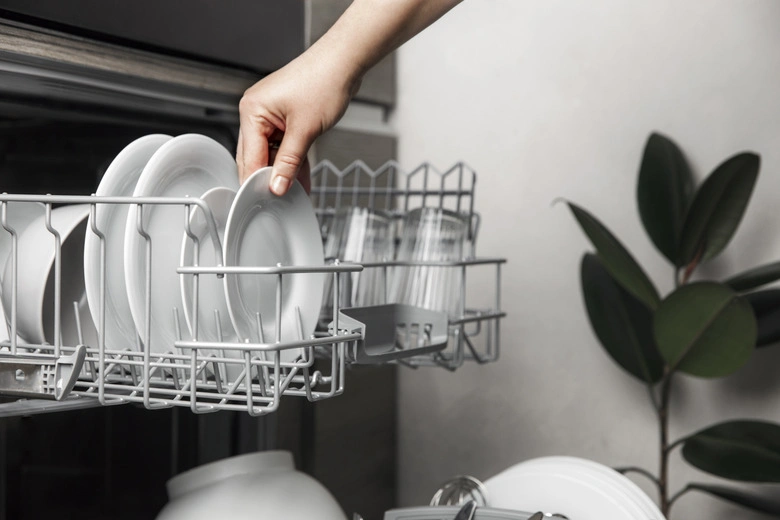
Pull the lower dish rack all the way out until it stops. Lift the front wheels slightly to dislodge the rack from the side tracks.
Set the bottom rack aside on a clean towel or kitchen floor. Unlatch the rack stops on the upper track to remove the top rack.
Take out the removable silverware basket and set it aside as well. Emptying the tub gives you clear access to lower filters and spray components.
Step 2: Remove and Clean the Dishwasher Filter
Locate the cylindrical glass trap filter at the bottom center of the tub floor. Turn the plastic filter handle counterclockwise a quarter turn.
Pull the filter assembly straight up to release it from the sump housing. Separate the fine mesh screen from the plastic filter cylinder.
Take the filter parts to your sink and rinse them under warm running water. Use a soft nylon brush to scrub away trapped food particles and slimy grease.
Never use harsh wire tools that could tear the fine filter mesh. Reassemble the clean filter pieces and set them aside for installation later.
Step 3: Clean the Drain Area
Inspect the exposed sump basin beneath the filter opening for trapped food debris. Check for broken glass pieces, fruit pits, bone fragments, or plastic twist ties.
Use a soft cloth or paper towel to scoop out standing dirty water and solids. Clean debris from the drain area to allow water to exit quickly.
Wipe down the plastic basin walls with warm water and mild dish soap. Check the rubber check valve flap near the drain inlet for blockage.
A clear drain path stops standing water errors and keeps pump motors running smoothly.
Step 4: Clean the Spray Arms
Inspect the lower spray arm located directly above the sump basin floor. Pull the spray arm upward firmly or unscrew its center retention cap.
Examine all tiny water jet holes along the top and bottom of the spray arm. Food particles and hard mineral seeds often clog these tiny openings.
Use a wooden toothpick or small wire to poke debris out of clogged nozzles. Rinse the hollow spray arm under hot tap water to flush out loose bits.
Reattach the spray arm and spin it by hand to verify smooth movement.
Step 5: Clean the Dishwasher Interior
Wipe down all interior tub walls, corners, and ceiling surfaces with a soapy cloth. Pay attention to back corners where water spray does not hit directly.
Clean the float switch located near the front left corner of the tub floor. Move the plastic dome up and down gently to clear trapped soap scum.
A stuck float switch causes water overfill errors or stops filling completely. Wipe the stainless steel or plastic inner door liner with a damp cloth.
Removing grease buildup from interior walls improves overall washing efficiency during cycles.
Step 6: Clean the Door, Gasket, and Edges
Inspect the flexible rubber door gasket surrounding the tub frame for black mold spots. Dip a soft microfiber cloth into warm water mixed with mild dish soap.
Wipe along the inner folds of the rubber seal to remove hidden grime. Do not pull hard on the rubber gasket or pull it out of its channel.
Clean the bottom edge of the dishwasher door where water spray cannot reach. Scrub away dried grease splatters along side door edges using an old toothbrush.
A clean door seal keeps water inside the machine during wash cycles.
Step 7: Clean the Racks and Utensil Basket
Inspect plastic-coated wire dish racks for peeling coatings or rust spots. Wipe down all rack tines using a damp cloth and mild dish soap.
Scrub the removable silverware basket using a small brush under running sink water. Remove trapped food crumbs wedged inside small grid slots at the bottom.
Rinse all rack parts thoroughly before placing them back into the dishwasher tub. Reinstall the lower filter assembly and click it securely into place.
Slide the lower and upper racks back into their support tracks smoothly.
Step 8: Run a Dishwasher Cleaning Cycle
Reinstall all cleaned parts, filters, and wire racks back into the appliance. Fill a dishwasher-safe glass bowl with two cups of white distilled vinegar.
Place the vinegar bowl upright on the center of the top dish rack. Do not add regular dish detergent or laundry soap to the dispenser door.
Close the door and select a normal wash cycle with high heat settings. The vinegar dissolves grease, clears soap scum, and sanitizes interior surfaces.
Let the complete wash and rinse cycle finish without interrupting the machine.
You can read about: How to Start a Dishwasher Frigidaire
How to Remove Odors From a Frigidaire Dishwasher
Foul odors stem from trapped food scraps and stagnant water inside the drain pump. Running a vinegar cycle handles most common smells effectively.
If sour smells persist after vinegar treatment, use a baking soda freshener cycle. Sprinkle one cup of fresh baking soda across the bottom tub floor.
Run a short hot water cycle to dissolve the powder completely. Baking soda neutralizes stubborn acidic smells and refreshes plastic components.
Leave the door slightly open overnight to allow internal air circulation. Fresh air prevents mold spores from growing on damp rubber seals.
How to Remove Hard Water Buildup
Hard tap water leaves chalky white mineral spots on interior walls and heating coils. These mineral deposits reduce heat transfer and leave spots on clean glass dishes.
Knowing how to clean frigidaire dishwasher tubs affected by hard water requires acid treatments. Commercial dishwasher cleaners containing citric acid break down stubborn mineral scale fast.
Pour one packet of citric acid powder into the main detergent cup. Run a hot water wash cycle with an empty tub to dissolve scale.
Repeat this process monthly if your home uses hard unconditioned well water.
How Often Should You Clean a Frigidaire Dishwasher?
Establishing a regular maintenance schedule keeps your appliance working at top performance. Wipe up visible food spills on the door edge after every wash cycle.
Clean the glass trap filter at least once every month for best results. High-use households that skip pre-rinsing dishes should clean filters every two weeks.
Run a deep vinegar hot cycle once every month to clear grease. Clean rubber door gaskets and spray arm nozzles every three months.
Consistent care stops heavy carbon deposits from forming on heating elements.
Signs Your Frigidaire Dishwasher Needs Cleaning
Your appliance provides clear signs when internal components need immediate cleaning attention. Pay attention to these warning signs during daily kitchen routines:
- Dishes come out covered in gritty food film or water spots.
- Standing dirty water remains in the tub after cycles finish.
- Sour, musty odors come from the tub when opening the door.
- Water sprays softly or spray arms fail to rotate smoothly.
- The machine makes humming sounds due to clogged drain pumps.
Addressing these issues early prevents permanent damage to internal electrical water pumps.
Tips to Keep Your Frigidaire Dishwasher Clean
Preventive habits reduce how often you must perform deep cleaning sessions. Scrape food scraps off plates into the trash before loading them.
Do not pre-rinse dishes completely, as modern detergents need some food soil to activate. Run hot tap water at your kitchen sink before starting dish cycles.
Starting cycles with hot water improves detergent breakdown and washes away grease. Use high-quality detergent pods and fill the rinse aid dispenser monthly.
Following standard tips on how to clean frigidaire dishwasher systems saves energy and time.
When to Call a Dishwasher Repair Professional
Some appliance failures require technical tools and expert training rather than routine home care. Homeowners should not attempt complex electrical or plumbing repairs alone.
Call a qualified repair technician if water leaks onto your kitchen floor constantly. Seek help if control boards display persistent error codes that reset fails to clear.
Broken heating elements, failing drain motors, and faulty inlet valves need professional replacement parts.
For reliable diagnostic service and repairs, contact Just Appliances. If you live in Western Washington, schedule certified Dishwasher Repair in Kent to restore your machine safely.
Conclusion
Mastering how to clean frigidaire dishwasher models keeps your kitchen running smoothly and extends appliance life. Regular monthly care clears clogged filters, removes unpleasant smells, and stops dirty water backup. Using simple vinegar rinses and manual filter washes protects pump motors and keeps dishes spotless. Follow these steps to enjoy clean dishes every single day.
Taking time for monthly appliance care saves money on utility bills and prevents premature replacements. Simple maintenance habits deliver great washing performance for years to come.
Frequently Asked Questions
Can I clean my dishwasher using bleach?
Do not use bleach if your unit has a stainless steel interior tub. Bleach corrodes stainless steel surfaces and damages internal rubber seals over time.
Why does my dishwasher leave a white film on glasses?
White film indicates hard water mineral scale or excess detergent powder. Run a vinegar rinse cycle and use a rinse aid liquid regularly.
How do I clean a clogged dishwasher spray arm?
Remove the spray arm and rinse it under warm tap water. Clear clogged water holes using a plastic toothpick or small wire
Why is water standing in the bottom of my dishwasher?
Standing water usually points to a clogged glass trap filter or blocked drain hose. Clean the lower filter and inspect the drain sink area for blockages.