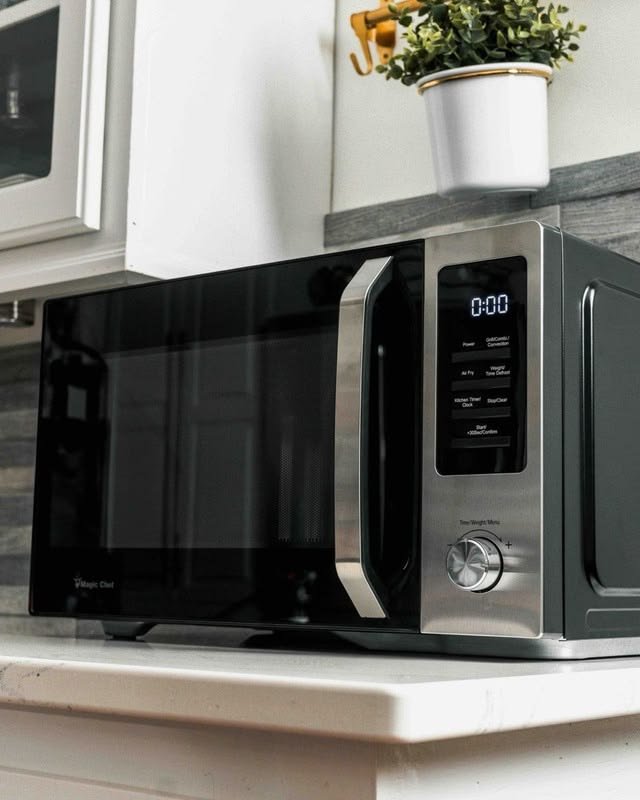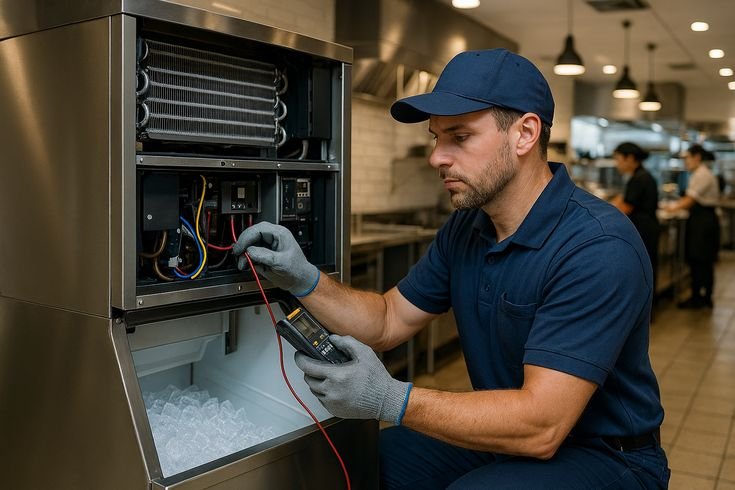
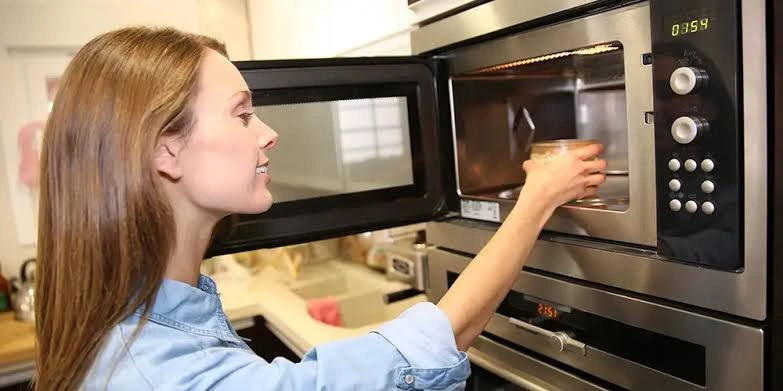
A microwave that runs without heating food usually has a blown high-voltage fuse, a faulty door switch, or a burned-out magnetron. You can test simple parts like switches with a multimeter or reset the power to fix minor glitches.
Safety comes first during any appliance check. High-voltage capacitors store energy even when unplugged, so discharge them before touching internal parts. Learning how to repair microwave oven not heating safely helps you fix basic issues or decide when to call Just Appliances for help.
How Does a Microwave Oven Heat Food?
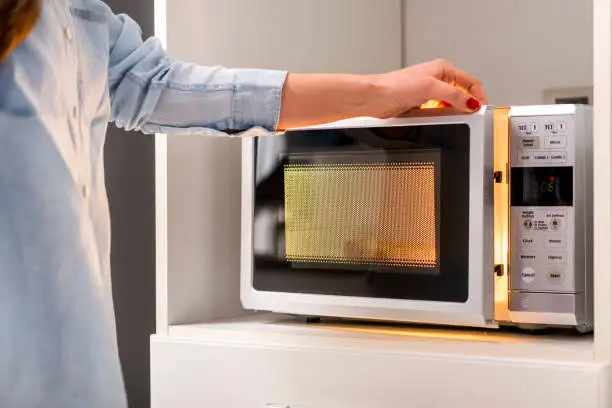
Microwave ovens use electromagnetic energy to cook meal portions quickly. An internal part called a transformer boosts household electricity to a high voltage. This high voltage powers the magnetron tube.
The magnetron converts electric power into radio waves. These waves bounce around inside the metal walls. Water molecules in your food absorb the waves and vibrate rapidly. That rapid motion creates friction, which warms your food evenly.
If any high-voltage part breaks, energy stops flowing. The turntable turns and lights stay on, but your food remains cold.
Signs Your Microwave Oven Is Not Heating Properly
Catching heating issues early prevents bigger repairs. Watch for these clear signs that your unit needs attention:
- Food stays cold after a full heating cycle.
- The unit takes twice as long to warm a glass of water.
- You hear loud buzzing or humming noises while it runs.
- You smell burning wire insulation or plastic.
- Sparks appear inside the cooking area during operation.
- The timer counts down, but the air inside stays cool.
If you notice any of these signs, stop using the appliance. Running a unit without heat can damage other internal parts over time.
Common Reasons a Microwave Oven Is Not Heating
When your microwave stopped heating, a few key parts are usually responsible.
First, door interlock switches prevent radiation leaks. If one switch fails, the unit will not start the heating cycle.
Second, the main diode controls voltage flow. A burned diode stops electricity from reaching the magnetron.
Third, a blown thermal fuse cuts power if the unit gets too hot. Clogged air vents often cause this safety part to trip.
Finally, the magnetron itself can wear out. Heavy use over many years degrades the internal filament. When that happens, the microwave won’t heat food at all.
Safety Precautions Before Repairing a Microwave Oven
Microwave repair carries serious electrical risks. Always follow these rules before opening the outer cabinet:
- Unplug the power cord from the wall outlet completely.
- Remove metal jewelry, watches, and rings from your hands.
- Wear thick rubber gloves and safety glasses.
- Discharge the high-voltage capacitor using insulated pliers.
- Never touch wires with your bare hands.
- Work in a dry area with good lighting.
Never operate a microwave with its outer cabinet removed. Unshielded high-voltage power can cause severe injury.
Tools You Need to Repair a Microwave Oven
Gather simple tools before you start work on your unit:
- Insulated Phillips screwdriver
- Insulated flathead screwdriver
- Digital multimeter with test leads
- Needle-nose pliers with rubber grips
- Safety goggles
- Heavy rubber work gloves
Using insulated tools protects you from stored electrical energy.
How to Repair a Microwave Oven That Is Not Heating
Follow these steps to diagnose a microwave heating problem step by step.
First, unplug the unit from the wall. Remove the cabinet screws on the sides and back. Lift off the metal cover carefully.
Second, locate the high-voltage capacitor. Use an insulated screwdriver to short across its terminals. Touch the metal blade to both posts at the same time. This action safely discharges stored energy.
Third, test the door switches. Disconnect the wire leads from each switch. Place your multimeter probes on the terminals. Press the switch button down. The meter should show near zero ohms of resistance. Replace any switch that shows no continuity.
Fourth, check the high-voltage diode. Set your meter to diode mode. Connect the leads across the diode terminals. Reverse the leads and check again. A good diode shows continuity in only one direction.
Fifth, test the magnetron terminals. Touch one meter probe to a terminal and the other to the metal case. If you see continuity to the ground, the magnetron is bad.
Taking these steps helps you know how to repair microwave oven not heating without guessing on parts.
How to Reset a Microwave Oven
Electronic glitches can freeze the control board and stop the heating cycle. Resetting the unit clears minor memory errors.
Unplug the power cord from the wall outlet. Leave the appliance unplugged for two to three minutes. This time lets internal capacitors drain power completely.
Plug the power cord back into the wall outlet. Set the clock and test the unit with a cup of water. Cook on high power for thirty seconds.
If the water warms up, a soft board glitch caused the issue. If the water stays cold, a hardware part needs repair.
Microwave Runs but Does Not Heat: What to Do
It is frustrating when a microwave runs but does not heat. The light turns on, the glass plate spins, and fans blow air, yet food stays cold.
This issue almost always points to the high-voltage circuit. The low-voltage parts like display panels and fan motors work fine. However, power fails to reach the heating elements.
First, check if demo mode is active. Some brands have a store mode that disables heat. Check your manual to turn off demo mode.
Second, check the main high-voltage fuse. If this fuse blows, fans still run, but heat stops. Replace a blown fuse with an exact rating match.
Common Microwave Heating Problems and Their Solutions
Understanding common fixes saves time during a microwave oven not heating inspection:
Broken Door Switch: Replace the switch assembly. Door switches cost little and snap into plastic latches easily.
Burned High-Voltage Diode: Install a new diode. Diodes are simple to unscrew and replace.
Tripped Thermal Cutoff: Clear dust from rear vents. Replace the thermal fuse if it shows no continuity.
Failed Magnetron: Replace the magnetron tube. Ensure the new tube matches your model number exactly.
Damaged Control Board: Replace the main board if relays fail to send power to the transformer.
Learning how to repair microwave oven not heating involves matching each symptom to the right component.
Mistakes to Avoid When Repairing a Microwave Oven
DIY repairs save money, but simple mistakes cause injury or part failure:
- Forgetting to discharge the capacitor before touching internal components.
- Installing a fuse with a higher amp rating than the original factory specification.
- Touching magnetron terminals with bare fingers.
- Over-tightening mounting screws on plastic door latches.
- Testing parts while the unit is plugged into wall power.
- Skipping safety gear like rubber gloves and eye protection.
Take your time and double-check every step to work safely.
Tips to Prevent Microwave Heating Problems
Good habits help extend the life of your appliance and prevent a microwave not heating failure:
- Clean food splatters from interior walls right away.
- Never run the unit while the cooking cavity is completely empty.
- Keep air vents free of dust and wall obstructions.
- Close the door gently to avoid damaging door latch switches.
- Use microwave-safe glass or ceramic containers only.
- Avoid running long cooking cycles on maximum power back to back.
Small daily habits keep your appliance running smoothly for years.
Repair vs. Replace: When Is It Time for a New Microwave?
Deciding between fixing or replacing your unit depends on age and cost.
Consider repairing if your unit is under five years old. Simple fixes like door switches, fuses, or diodes cost little. Replacing these parts extends the lifespan of a quality appliance.
Consider replacing if your unit is over eight years old. Replacing a costly magnetron or control board often costs more than a brand-new microwave. Countertop models are cheap to replace, while built-in models are worth repairing.
Knowing how to repair microwave oven not heating helps you make the right choice for your household budget.
When to Call a Professional for Microwave Oven Repair
Some repairs require special training and professional tools. Call a licensed technician if you feel unsafe working around high voltage.
Complex electrical issues, broken main control boards, and magnetron replacements are best handled by experts. Professional technicians have gear to test radiation leaks after completing a repair.
If you live in Western Washington and need expert help, contact Just Appliances. Our technicians specialize in Microwave Repair in Kent, WA to restore your kitchen appliances quickly and safely.
Conclusion
A microwave that stops heating can quickly disrupt your daily routine, but many common causes are straightforward to identify and troubleshoot. By checking components such as the door switches, fuse, and high-voltage diode, you may be able to resolve minor issues safely. Always unplug the microwave and discharge the high-voltage capacitor before inspecting or repairing internal parts.
If the problem persists after basic troubleshooting or involves major electrical components, it’s best to seek professional repair. Timely repairs can help restore your microwave’s performance, improve safety, and extend the appliance’s lifespan.
Frequently Asked Questions
Why is my microwave turning on but not heating food?
A microwave that turns on without heating usually has a failed door switch, blown high-voltage fuse, or bad magnetron. The control board lights up, but energy never reaches the cooking tube.
Is it safe to repair a microwave oven myself?
It is safe only if you follow strict electrical safety rules. You must unplug the unit and discharge the high-voltage capacitor before touching internal wires.
How do I know if my microwave magnetron is bad?
Test the magnetron terminals with a multimeter. If the meter shows continuity between a terminal and the metal outer case, the magnetron is shorted and must be replaced.
How much does it cost to fix a microwave that won’t heat?
Minor parts like door switches or fuses cost very little. Replacing a magnetron costs more due to labor and part pricing.
How can I learn how to repair microwave oven not heating at home?
Start by checking simple parts like door switches, thermal fuses, and high-voltage diodes with a multimeter. Always disconnect power and discharge stored voltage first.