
Quick Fixes for a Non-Working Garbage Disposal: 8 Common Issues and Easy Solutions
A working garbage disposal is essential in keeping your kitchen running smoothly. From grinding up food scraps to preventing clogs, it plays a big role in everyday convenience. But when your garbage disposal suddenly stops working, it can be frustrating and messy. Whether it’s due to a simple power issue or a more complex mechanical problem, identifying the root cause is the first step toward getting it back in action.
“Understanding the common causes behind a malfunctioning garbage disposal not only saves time but also helps prevent costly repairs. From power supply issues to clogged drains, these simple troubleshooting tips can keep your kitchen running smoothly.”
— Home Appliance Repair Expert
In this guide, we’ll walk you through eight common reasons why a garbage disposal might stop working and offer practical solutions to help you fix it. By the end, you’ll know when to attempt repairs yourself and when to call in a professional.
1. Power Supply Issues
One of the most common and often overlooked reasons for a garbage disposal not working is a power supply issue. Your disposal may not be receiving power because of a tripped breaker, a loose plug, or an internal reset that needs to be activated.
Solution:
- Check the electrical outlet: Ensure the garbage disposal is plugged in securely.
- Reset the circuit breaker: Go to your breaker box and locate the breaker that controls your disposal. If it’s tripped, flip it back to the “on” position.
- Press the reset button: Locate the small red or black reset button at the bottom of the disposal unit and press it firmly.
If the disposal still won’t turn on after these steps, it may indicate a deeper electrical issue, in which case an electrician might be necessary.
2. Jammed or Clogged Disposal
Garbage disposals can easily get jammed by food scraps, silverware, or foreign objects. When something is caught in the blades, it can prevent them from spinning and may even cause a humming noise.
Solution:
- Turn off the disposal: Make sure the unit is off and unplugged to avoid injury.
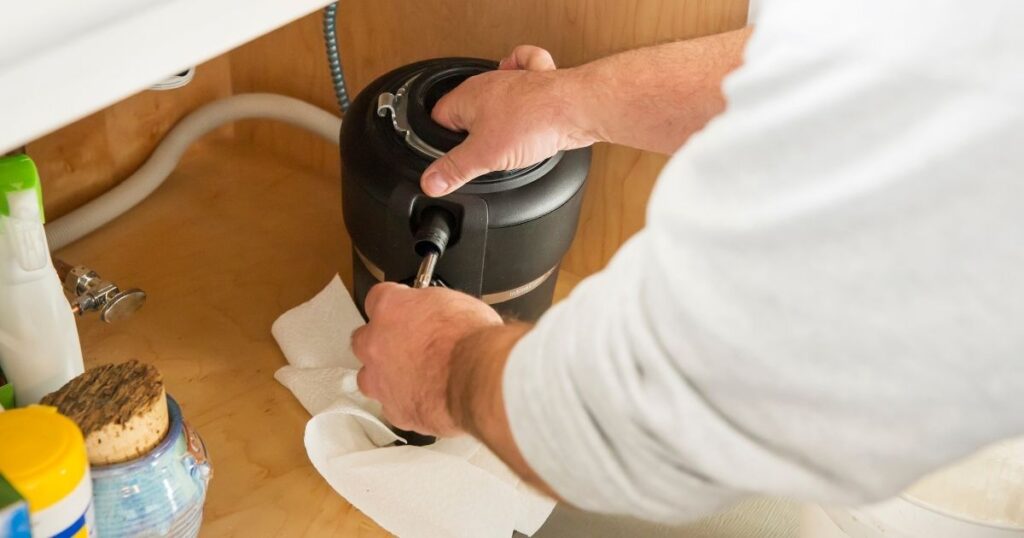
- Use a hex wrench: Insert a 1/4-inch hex wrench into the socket on the bottom of the disposal and turn it back and forth to manually free up the jam.
- Remove visible obstructions: Using tongs, carefully remove any visible blockages within the disposal.
Avoid using your hands directly in the disposal. Once cleared, plug it back in and try turning it on.
3. Overheating or Motor Burnout
If the garbage disposal has been overused, it might overheat, causing the internal thermal overload to trip. In more severe cases, the motor may be burnt out, requiring replacement.
Solution:
- Allow the unit to cool down: Wait about 15 minutes, then press the reset button located at the bottom of the disposal.
- Consider a replacement: If it still doesn’t start and you suspect the motor is burnt out, a replacement unit may be necessary. Consult a professional if you’re unsure about this step.
4. Faulty Reset Button
The reset button is designed to restore the disposal to working order after a minor overload, but sometimes this button can become stuck or faulty, making it ineffective.
Solution:
- Inspect the reset button: Check if it’s sticking or appears damaged.
- Press firmly: Sometimes, a firm press can resolve the issue if the button has become unresponsive.
- Call a technician: If the button doesn’t work or is visibly damaged, it might be time to replace it, which can be done by a qualified technician.
5. Blocked Drain
Even when your garbage disposal is working, a blocked drain can prevent water and waste from flowing through properly. This can lead to clogs and unpleasant odors in your kitchen sink.
Solution:
- Use a plunger: Place a plunger over the sink drain to help remove minor blockages.
- Drain snake: For more severe clogs, use a drain snake to remove debris from the sink drain or P-trap.
- Flush with hot water: After clearing the blockage, flush the drain with hot water to keep it clean.
Consider using a natural drain cleaner monthly to prevent future blockages.
6. Worn Out Blades
Over time, the blades in a garbage disposal can become dull, making it difficult to grind up food properly. While garbage disposal blades aren’t razor-sharp, significant wear and tear can affect performance.
Solution:
- Sharpen the blades: Place a few ice cubes into the disposal and run it for about 10-15 seconds. This can help remove small build-ups and slightly sharpen the blades.
- Replace if necessary: If the disposal is still struggling after this, consider replacing the blades or the entire unit, especially if it’s an older model.
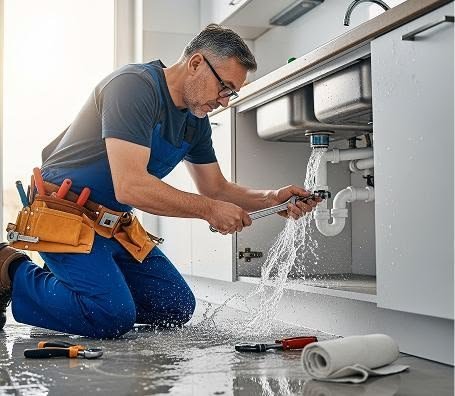
7. Leaking Garbage Disposal
Leaks around the garbage disposal unit may result from loose connections, worn-out seals, or cracks in the disposal itself. This is not only inconvenient but can also lead to water damage under your sink.
Solution:
- Tighten connections: Check all connections between the disposal, sink, and drain pipes. Tighten any loose screws or clamps.
- Replace worn seals: If tightening connections doesn’t help, the seals may need replacement. Seals can wear out over time and are often replaceable.
- Professional repairs: If there’s a visible crack or significant leak, it’s best to contact a professional or consider replacing the unit entirely.
8. Faulty Switch or Wiring
A faulty wall switch or wiring issue can cause your garbage disposal to stop working entirely. These issues may be beyond DIY repair, especially if you’re not experienced with electrical work.
Solution:
- Inspect the switch: Test the wall switch to see if it feels loose or if the disposal works intermittently.
- Check wiring: Loose or frayed wiring can disrupt power to the disposal. Ensure everything is tightly connected.
- Call an electrician: Electrical work can be hazardous. If you suspect faulty wiring, consult an electrician for safe repairs.
Conclusion
A garbage disposal can encounter various issues, from minor power problems to mechanical or electrical malfunctions. Understanding these eight common reasons for a non-working garbage disposal can help you troubleshoot effectively and know when professional assistance is necessary.
To keep your garbage disposal in optimal shape, practice regular maintenance:
- Avoid grinding hard items like bones or large fruit pits.
- Steer clear of fibrous foods like celery, which can wrap around the blades.
- Rinse the unit with cold water after each use to keep it clear of debris.
If you’re experiencing any of these issues and need further assistance, contact us for expert garbage disposal repair services. Our professional technicians are ready to help you restore your kitchen’s functionality quickly and efficiently.